
GPT-6 Astra, 6.1 Sol, Luna: API Pricing, Specs, and Which to Pick
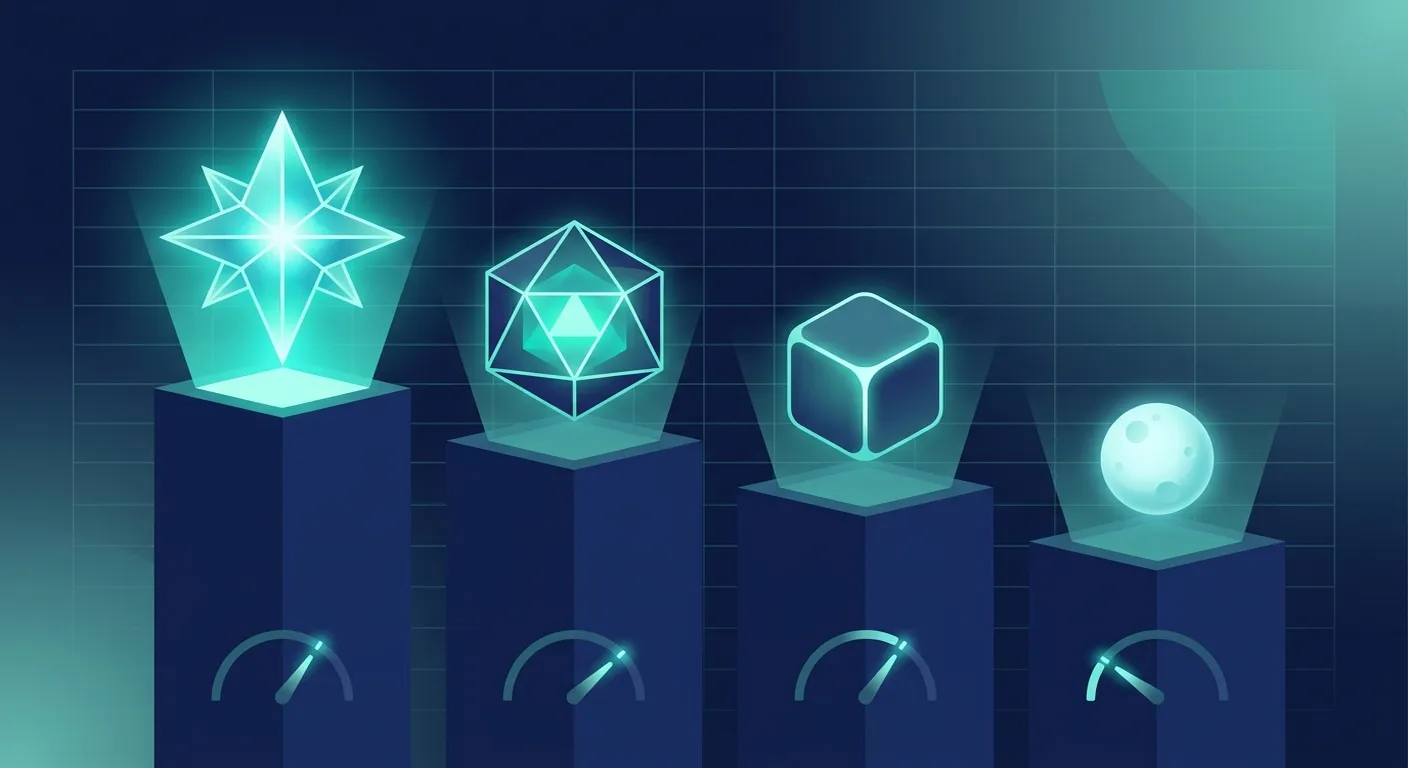
Four GPT-6 Models in One Month: Who Replaces Whom
In September 2026, OpenAI's flagship line turned over completely. Unlike July's GPT-5.6 Sol, Terra, and Luna, which launched three tiers at once, GPT-6 arrived in three waves:
- 2026-09-03: GPT-6 Astra launched, described by OpenAI as its most capable model for the most demanding work
- 2026-09-22: GPT-6 Sol and GPT-6 Luna launched on the same day — one for complex coding and agentic work, one for high-volume, focused tasks
- 2026-09-29: GPT-6.1 Sol launched, positioned as "near-Astra capability at about one-fifth of Astra's price"
For IT leaders, the point is not memorizing four names — it's that your cost structure has been reshuffled again: the most and least expensive models differ in unit price by 100x. Most teams' default reaction is "switch everything to the newest, strongest model," which is exactly the most expensive choice.
TL;DR
| Your workload | Try first |
|---|---|
| Hardest reasoning, long-horizon agents, research | GPT-6 Astra |
| Everyday coding, agent workflows, professional documents | GPT-6.1 Sol |
| High-volume summarization, extraction, classification, routing | GPT-6 Luna |
Model Positioning and Official Specs
The positioning below is taken from the model pages in OpenAI's developer documentation.
GPT-6 Astra: The Strongest — and Most Expensive
OpenAI describes it as "our most capable model for the most demanding work," suited to complex reasoning, coding, computer use, research, and document creation. OpenAI's safety overview also notes that Astra is OpenAI's first model to reach the "Critical" cybersecurity capability level under its Preparedness Framework — for enterprises, a reason to design permissions and auditing up front.
GPT-6.1 Sol: The Workhorse for Most Teams
GPT-6.1 Sol is the upgrade to GPT-6 Sol, officially positioned as near-Astra performance at a lower cost. It carries the same price as GPT-6 Sol ($2/$10) but cheaper cached input: $0.10 on GPT-6.1 Sol versus $0.20 on GPT-6 Sol. There is little reason to start a new project on GPT-6 Sol, and the GPT-6 Sol documentation page itself points to 6.1 Sol.
GPT-6 Luna: The Cost Floor for High-Volume Work
OpenAI describes it as our most efficient model for focused, high-volume tasks. At $0.10/$0.50 it is the cheapest member of the GPT-6 family, suited to summarization, extraction, classification, and routing — high-volume work where each item is simple.
Specs and Pricing Comparison
| Item | GPT-6 Astra | GPT-6.1 Sol | GPT-6 Sol | GPT-6 Luna |
|---|---|---|---|---|
| Model ID | gpt-6-astra | gpt-6.1-sol | gpt-6-sol | gpt-6-luna |
| Launch date | 2026-09-03 | 2026-09-29 | 2026-09-22 | 2026-09-22 |
| Input (per million tokens) | $10 | $2 | $2 | $0.10 |
| Cached input | $1 | $0.10 | $0.20 | $0.01 |
| Output (per million tokens) | $50 | $10 | $10 | $0.50 |
| Context window | 1,050,000 | 1,050,000 | 1,050,000 | 1,050,000 |
| Max output per request | 128,000 | 128,000 | 128,000 | 128,000 |
| Knowledge cutoff | 2026-04-30 | 2026-04-30 | 2026-04-20 | 2026-05-18 |
Standard-tier prices for requests with 272K input tokens or fewer, in USD. Sources: OpenAI developer documentation model pages and the official pricing page (checked 2026-09-30).
Three Pricing Rules That Are Easy to Miss
- Long-prompt surcharge: when a single request's input exceeds 272K tokens, the entire request is billed at 2x for input and cache, and 1.5x for output. The 1M context is usable, but not at the base price
- Cache writes are billed: writing to the cache costs 1.25x the uncached input rate; only subsequent reads are cheaper. For a prompt sent only once, caching costs more
- Batch and Flex are half price: for work that doesn't need an immediate answer, Batch or Flex cuts the price in half; Fast mode is 2x the Standard price, and regional processing adds 10%
Real Cost Math (Arithmetic, Not Benchmarks)
Assume 50 million input tokens and 10 million output tokens per month, every request under 272K tokens, no caching:
| Model | Input cost | Output cost | Monthly total |
|---|---|---|---|
| GPT-6 Astra | $500 | $500 | $1,000 |
| GPT-6.1 Sol | $100 | $100 | $200 |
| GPT-6 Sol | $100 | $100 | $200 |
| GPT-6 Luna | $5 | $5 | $10 |
| (Reference) GPT-5.6 Sol | $200 | $200 | $400 |
What the numbers say directly:
- Astra costs 100x Luna. Sending an entire pipeline to Astra is the most common way budgets get out of control
- GPT-6.1 Sol is exactly one-fifth of Astra, and half the price of the previous-generation GPT-5.6 Sol ($4/$20)
- If your system prompt is long and resent often, the cache price is the real difference between 6.1 Sol and 6 Sol: if 40 million of the 50 million input tokens above hit the cache, cached input costs $4 on 6.1 Sol and $8 on 6 Sol
How to Choose: Route Work to the Right Model
Routing by Scenario
| Scenario | Recommendation | Why |
|---|---|---|
| Front-line support triage, intent classification | Luna | High volume, simple items, lowest price |
| Document summarization, field extraction | Luna; move to 6.1 Sol if quality falls short | Evaluate on the cheapest option first |
| Internal coding assistants, agent workflows | GPT-6.1 Sol | Officially aimed at coding, computer use, and professional work |
| High-stakes legal or financial analysis | Evaluate 6.1 Sol and Astra side by side | Compare on your own cases before paying the 5x premium |
| Research and long-horizon agent tasks | Astra | The hardest work, per OpenAI's positioning |
On "Which Model Produces Better Output"
OpenAI has published its own evaluations, but this guide does not cite benchmarks that haven't been independently reproduced. The GPT-6.1 Sol documentation puts it plainly: compare it with Astra on your own tasks to assess the tradeoff between quality and cost. That is our advice too — run a small evaluation on 50 to 100 real cases, and the numbers will be more reliable than any leaderboard.
CloudInsight Multi-Platform One-Stop Procurement | No More Multi-Vendor Management
When you use the GPT-6 family, Claude, and Gemini at the same time, the hardest part is often not the technology but multiple credit cards, multiple bills, foreign-currency settlement, and invoicing.
Contact CloudInsight for a GPT-6 Enterprise Quote
We offer one-stop multi-platform procurement, enterprise discounts, Taiwan uniform invoices, and technical support in Chinese.
Four Things to Change Before Migrating from GPT-5.6
1. Allowed reasoning.effort Values Have Changed
GPT-6.1 Sol supports low, medium (default), high, xhigh, and max, and does not support none or minimal. If your code sets effort to none to save money, simply swapping the model name will fail. GPT-6 Sol and Luna still support none.
2. Move Tool Calling to the Responses API
The GPT-6.1 Sol documentation states that tool calling should use the Responses API; Chat Completions still works but without tool calling. On GPT-6 Sol and Luna, Chat Completions supports function calling only with reasoning_effort set to none.
3. Using a Cloud Platform? Check Which Models Are Listed
AWS has announced general availability of GPT-6 Sol and GPT-6 Luna (2026-09-22) and GPT-6.1 Sol (2026-09-29) on Amazon Bedrock. Bedrock lets usage roll into your existing AWS bill, but its model list is not necessarily in sync with OpenAI's direct API — confirm against AWS's official announcements before you buy.
4. Keep Model Names in Configuration
Four models in one month is the best argument for this: hard-code a model ID and every generation change means a code change and a redeploy. Put strings like gpt-6.1-sol in a config file or environment variable, and switching models becomes a one-line configuration change.
FAQ: GPT-6 Common Questions
What's the difference between GPT-6 Astra, 6.1 Sol, and Luna?
Astra is the strongest and most expensive flagship ($10/$50); GPT-6.1 Sol is the workhorse with near-Astra capability at about one-fifth the price ($2/$10); Luna is the low-cost model for high-volume simple tasks ($0.10/$0.50).
When did GPT-6 launch?
GPT-6 Astra launched on 2026-09-03, GPT-6 Sol and Luna on 2026-09-22, and GPT-6.1 Sol on 2026-09-29, per OpenAI's official announcement dates.
Is GPT-6.1 Sol one-quarter or one-fifth of Astra's price?
One-fifth. Official pricing is $10/$50 for Astra and $2/$10 for GPT-6.1 Sol, and OpenAI's announcement says one-fifth of Astra's standard API input and output token prices.
Does the GPT-6 1M context cost extra?
You can use up to the full context, but when a single request's input exceeds 272K tokens, the whole request is billed at 2x input and 1.5x output. Split long documents or use caching.
We're on GPT-5.6 — should we switch right away?
GPT-5.6 is still on the official price list and is not listed in OpenAI's deprecation notices. Evaluate GPT-6.1 Sol on the same set of cases first: its unit price is half of GPT-5.6 Sol's, so if quality holds, switching is a direct saving.
Conclusion: Don't Ask Which Model Is Strongest — Ask What the Job Is Worth
Three Core Recommendations
- Default to GPT-6.1 Sol, push high-volume simple work down to Luna, and move up to Astra only when your evaluation shows it's worth it
- Watch the 272K long-prompt threshold — split long documents or use caching rather than filling the full 1M
- Update
reasoning.effortand tool-calling code before migrating, and keep model names in configuration
Ready to Roll Out GPT-6?
Contact the CloudInsight sales team and we'll map the most cost-effective GPT-6 adoption path for your usage and existing cloud contracts.
Join our LINE Official Account for instant model-selection consultation.
Further Reading
- GPT-5.6 Sol, Terra, Luna: Which Tier Should You Pick?
- Claude Opus 5.5 and Sonnet 5.5: Complete Guide
- OpenAI API Pricing Explained
- AI API Pricing Comparison
References
- OpenAI API official pricing page (checked 2026-09-30)
- GPT-6 Astra model page — OpenAI developer docs
- GPT-6.1 Sol model page — OpenAI developer docs
- GPT-6 Sol model page — OpenAI developer docs
- GPT-6 Luna model page — OpenAI developer docs
- GPT-6 Astra: A new generation of intelligence — OpenAI (2026-09-03)
- Safety overview: GPT-6 Astra — OpenAI (2026-09-03)
- Introducing GPT-6 Sol and Luna — OpenAI (2026-09-22)
- Introducing GPT-6.1 Sol — OpenAI (2026-09-29)
- OpenAI GPT-6 Sol and GPT-6 Luna are now generally available on Amazon Bedrock — AWS What's New (2026-09-22)
- OpenAI GPT-6.1 Sol is now generally available on Amazon Bedrock — AWS What's New (2026-09-29)
Need Professional Cloud Advice?
Whether you're evaluating cloud platforms, optimizing existing architecture, or looking for cost-saving solutions, we can help
Book Free ConsultationRelated Articles
GPT-5.6 Sol, Terra, Luna: Which Tier Should You Pick?
GPT-5.6 reached GA on July 9, 2026, launching Sol, Terra, and Luna at once, and has since landed on AWS Bedrock, Microsoft 365 Copilot, and Azure. This guide breaks down the three tiers, their latest official pricing after the July–August 2026 cuts ($4/$20, $2/$12, $0.20/$1.20), real cost math, and the billing, data-residency, and contract issues Taiwanese enterprises need to check.
AI APIClaude Fable 5 Complete Guide 2026: The First Mythos-Tier Model — Features, Benchmarks & Enterprise Procurement
In June 2026 Anthropic released Claude Fable 5, the first publicly available Mythos-tier model. It tops SWE-Bench Pro at 80.3%, costs exactly double Opus 4.8 ($10/$50 per million tokens), and landed on AWS Bedrock and Google Cloud on launch day. This guide covers features, benchmarks, pricing, and procurement paths for Taiwanese enterprises.
AI APIClaude Opus 5.5 and Sonnet 5.5: API Pricing, Migration Changes, and Model Choice
Anthropic released Claude Opus 5.5 (Sept 22) and Sonnet 5.5 (Sept 28) in September 2026. Opus 5.5 is priced at $4/$20 — 20% below Opus 5 — and is now Anthropic's official default for most workloads; Sonnet 5.5 stays at $2/$10. This guide covers official specs, cache pricing, cost math, and the API changes that break code migrating from Opus 5 or Sonnet 5.