
Claude Fable 5 Complete Guide 2026: The First Mythos-Tier Model — Features, Benchmarks & Enterprise Procurement
Claude Fable 5 Complete Guide: The First Mythos-Tier Model — Features, Benchmarks & Enterprise Procurement
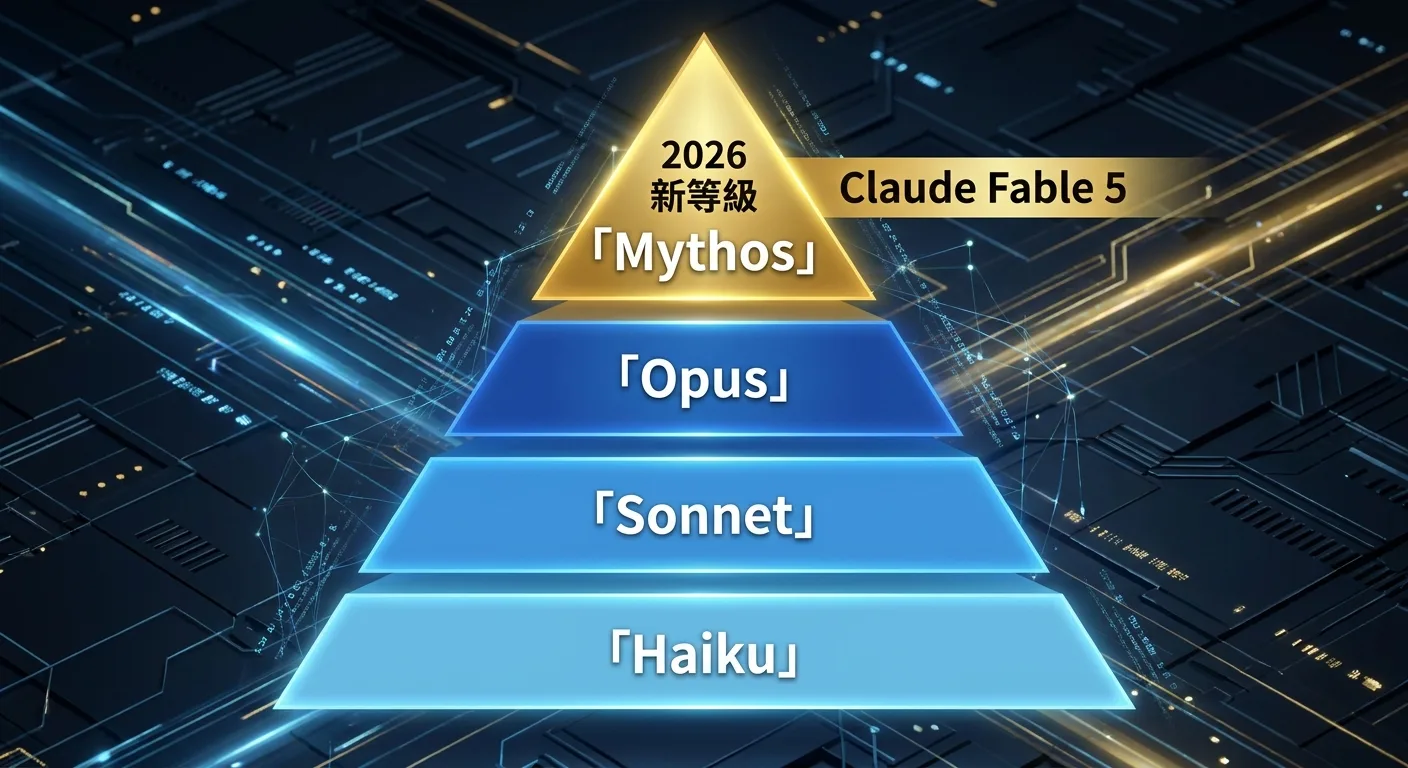
On June 9, 2026, Anthropic released two models at once: Claude Fable 5 and Claude Mythos 5. The former you can use today; the latter is restricted to a small set of vetted partners. This is the first time Anthropic has put a capability tier above Opus in front of ordinary users — the official definition of Mythos-class is blunt: "a tier of Claude models that sit above our Opus class in capability" (Anthropic, 2026).
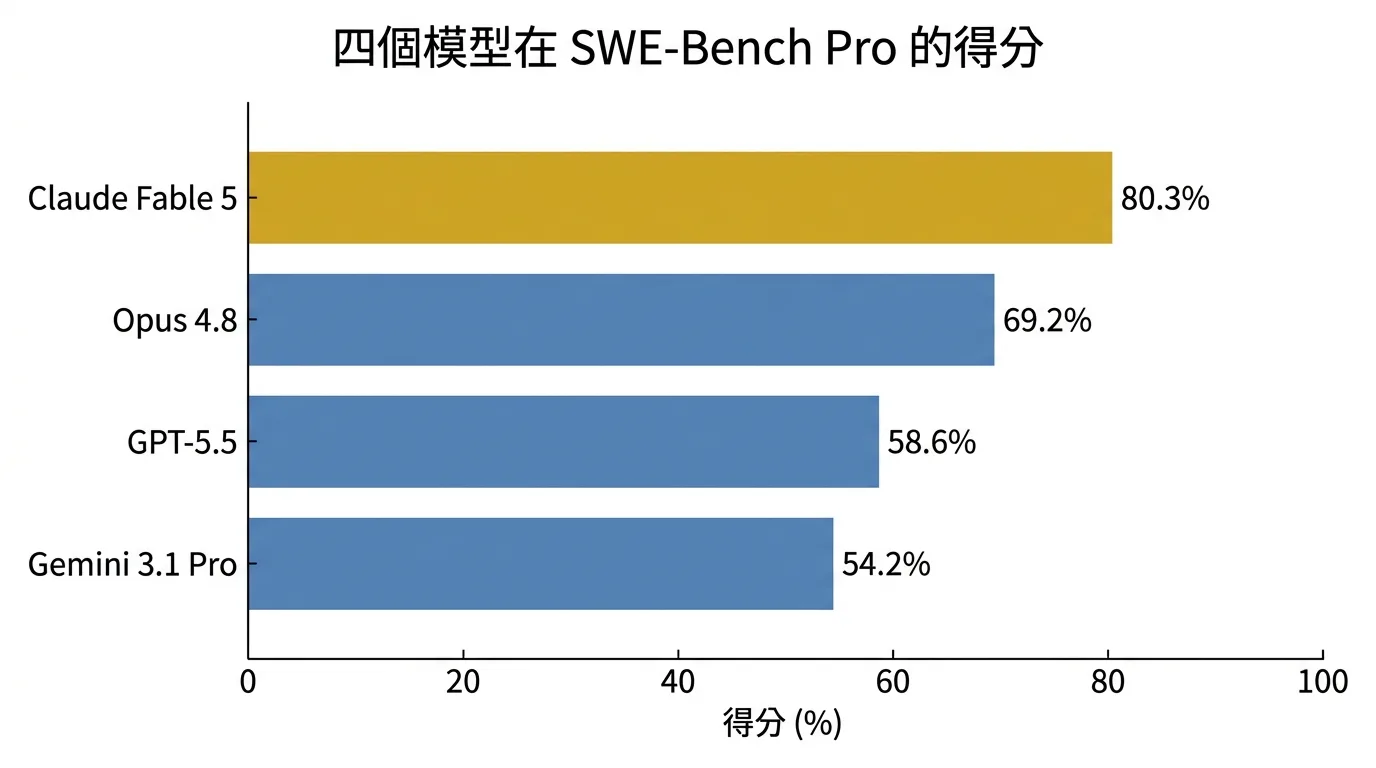
The numbers back up the announcement. On SWE-Bench Pro, Anthropic's agentic coding benchmark, Fable 5 scores 80.3% — eleven points above the previous flagship Opus 4.8 at 69.2%, and well clear of GPT-5.5 at 58.6% (Vellum, 2026). The cost is equally clear: $10 per million input tokens and $50 per million output tokens — exactly double Opus 4.8 (Anthropic Pricing, 2026).
Should you jump on this wave? This guide lays out what Fable 5 is, how it performs, where it sits in the Anthropic model family, how the pricing works, the multi-cloud availability — and the procurement path for Taiwanese enterprises.
What Is Claude Fable 5? The First Publicly Available Mythos-Tier Model
The direct answer: Claude Fable 5 is the flagship AI model Anthropic released on June 9, 2026, and the first "Mythos-tier" model open to ordinary users and enterprises. Mythos is a new capability tier above Opus — until now, the strongest Claude you could buy was Opus 4.8; the ceiling just moved up a level (Anthropic, 2026).
How does it relate to Claude Mythos 5, released the same day? They are the same underlying model. The difference is that Fable 5 ships wrapped in safety classifiers: when the system detects a request involving cyberattacks, biology/chemistry, or model distillation, the response automatically falls back to Claude Opus 4.8. Mythos 5 lifts those safeguards in specific domains, but is restricted to vetted Glasswing partners, with select biology researchers to follow (Anthropic, 2026).
Anthropic's rationale for this design is worth noting: "a response that falls back to Opus is a far better experience than an outright refusal from Fable." In other words, ordinary enterprise users get full Mythos-tier capability in the vast majority of scenarios, with a graceful downgrade — not a closed door — in a few sensitive domains.
The press coverage agrees on the framing. TechCrunch's headline puts it plainly: Fable 5 is "a version of Mythos the public can access today" (TechCrunch, 2026); The Register calls it "a tamer, safer Mythos" (The Register, 2026). For a deeper dive into the Mythos tier's naming logic and safety mechanics, see What Is the Mythos Model? Anthropic's Model Family Explained.
Fable 5 Core Capabilities and Benchmark Results
Where exactly is it stronger? Verifiable numbers first, real-world cases second.
Agentic Coding: New Records Across the Board
| Benchmark | Fable 5 | Opus 4.8 | GPT-5.5 | Gemini 3.1 Pro |
|---|---|---|---|---|
| SWE-Bench Pro (agentic coding) | 80.3% | 69.2% | 58.6% | 54.2% |
| FrontierCode Diamond (frontier-difficulty coding) | 29.3% | 13.4% | 5.7% | — |
| GDP.pdf (vision, no tools) | 29.8% | 22.5% | 24.9% | 16.7% |
Source: Vellum benchmark roundup (June 2026)
The row to watch is FrontierCode Diamond: Fable 5's 29.3% is more than double Opus 4.8's 13.4%. This benchmark, designed by Cognition, targets the "frontier difficulty" engineering problems where current models are weakest — a doubled score doesn't mean incremental polish; it means tasks that used to be impossible are now possible.
We ran our own test the day after launch, refactoring an internal billing reconciliation script (about 4,000 lines of Python across three services). Fable 5's first-pass success rate was clearly higher: the same prompt took Opus 4.8 two rounds of fixes to pass the tests, while Fable 5 passed on the first attempt. Small sample, but consistent with the benchmark trend.
Real-World Engineering Cases
The official announcement quotes two concrete enterprise data points: Stripe says Fable 5 "compressed months of engineering into days"; and in testing reported by The Register, Fable 5 completed a codebase-wide migration of a 50-million-line Ruby codebase in a day — work that would otherwise have taken a full team more than two months (The Register, 2026).
TechCrunch also caught an interesting angle: Fable 5 "can make weirdly fun video games with the click of a button" (TechCrunch, 2026) — which reflects long-horizon planning and multi-file coordination, and for enterprises translates into more reliable complex automation.
Beyond Coding: Knowledge Work and Vision
Don't let the coding numbers steal all the attention. The official announcement positions Fable 5 as state-of-the-art on nearly all capability benchmarks — software engineering, knowledge work, vision, and scientific research. Two non-coding signals matter for enterprises:
- Financial knowledge work: Fable 5 posts the highest score of any model on Hebbia's finance benchmark — more relevant than SWE-Bench for teams processing financial statements, contracts, and due-diligence documents.
- Vision: 29.8% on GDP.pdf (document vision without tools), above both Opus 4.8 (22.5%) and GPT-5.5 (24.9%). Scanned documents, report screenshots, and slide charts all benefit directly.
One under-appreciated spec: Fable 5 supports a 1M-token context window at standard pricing (a 900k-token request bills at the same per-token rate as a 9k one). Feeding in a full quarter's contracts, an entire codebase, or hundreds of pages of regulation in one shot used to be impossible or batched — this changes RAG architecture design in practice (see our LLM RAG Guide).
Where the Capability Ends
To be fair, the limits: first, domains covered by the safety classifiers (cyber offense, biology/chemistry, distillation) fall back to Opus 4.8 — for those workloads your effective capability equals Opus 4.8. Second, benchmark leads don't guarantee your scenario leads: the doubled FrontierCode gap appears only in the hardest task band; everyday summarization and classification are blind-test indistinguishable across the two generations. Third, it still makes mistakes — however impressive the 50-million-line migration sounds, fully automated migration without test coverage and human spot checks remains high-risk.
The Anthropic Model Family: From Haiku to Mythos
Put Fable 5 back into the product line and the procurement logic gets clearer. The June 2026 Anthropic family (per the official pricing page):
| Tier | Current model | Input/Output (per M tokens) | Best for |
|---|---|---|---|
| Mythos | Claude Fable 5 | $10 / $50 | Frontier-difficulty engineering, deep research, high-value knowledge work |
| Opus | Claude Opus 4.8 | $5 / $25 | Complex reasoning, production mainstay |
| Sonnet | Claude Sonnet 4.6 | $3 / $15 | General production workloads |
| Haiku | Claude Haiku 4.5 | $1 / $5 | High-volume simple tasks, classification, support |
Two things to note. First, Mythos 5 is also on the price list (same $10/$50) but marked "limited availability" — the Mythos-tier capability enterprises can actually buy is Fable 5. Second, "Anthropic's new model" now reads on two levels: a new flagship (Fable 5) and a new tier system (Mythos). If you're new to the company itself, start with What Is Anthropic?.
For model selection, the practical meaning of the tiering: Fable 5 does not replace Opus 4.8 — it stacks on top. Keeping most existing workloads on Opus 4.8 or Sonnet 4.6 is a perfectly sound configuration; we walk through the routing logic with a decision tree in Fable 5 vs Opus 4.8: The Complete Comparison.
One historical contrast worth factoring in: Fable 5's $10/$50 is actually lower than the now-deprecated Claude Opus 4.1 / Opus 4 ($15/$75). Anthropic cut "yesterday's flagship price" by a third while raising the capability ceiling a tier — the price curve per unit of capability keeps falling; the newest top spec simply always sits at the top of the price list. Budget-constrained teams shouldn't panic: today's Opus 4.8 is capability you couldn't buy two years ago, now at half price.
Fable 5 API Pricing at a Glance
The pricing structure, conclusion first: base rates are exactly double Opus 4.8, but every discount mechanism carries over (Anthropic Pricing, 2026):
- Standard: $10 input / $50 output per million tokens
- Prompt caching: cache hits cost just $1 (10% of standard input)
- Batch API: $5 input / $25 output — straight half price
- Long context: the full 1M-token window at standard pricing
- US-only inference (
inference_geo: "us"): 1.1x multiplier on all categories
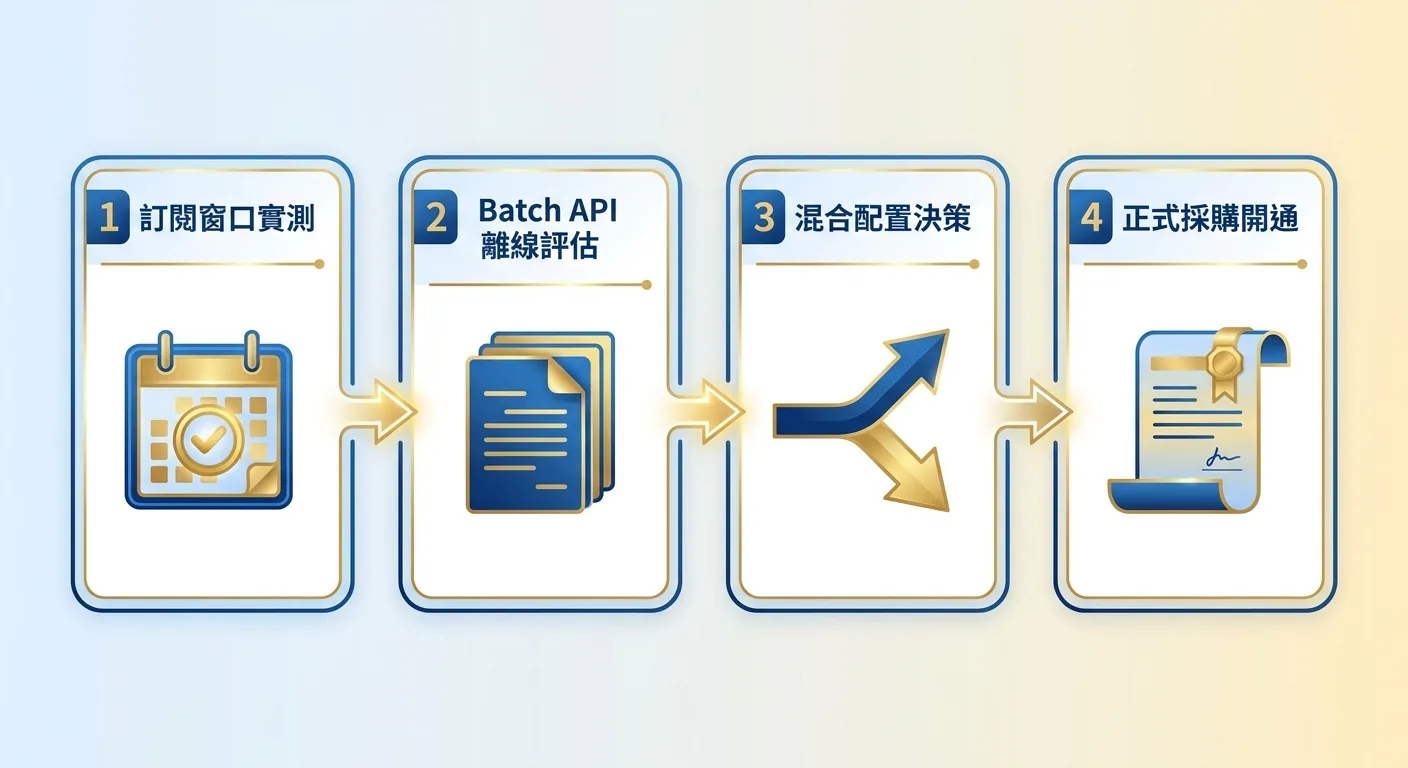
There's a worthwhile launch window: subscription plans (Pro / Max / Team / seat-based Enterprise) include Fable 5 at no extra cost from June 9 through June 22, after which usage credits bill at API rates (Anthropic, 2026). Translation: evaluate hands-on through a subscription first, then decide whether to scale via API.
One easily missed cost factor: models from Opus 4.7 onward (including Fable 5) use a new tokenizer that can consume approximately 30% more tokens for the same text (Anthropic Pricing, 2026). Don't estimate costs by applying new rates to old token counts — you'll underestimate.
For full cost modeling (three enterprise usage scenarios, generation-by-generation comparison, and how billing works when purchasing through a Taiwanese reseller), see Fable 5 API Pricing Explained.
Not sure what Fable 5 would do to your bill? CloudInsight offers enterprise AI API usage assessments: give us your current token usage and we'll model the cost of switching to Fable 5, staying on Opus 4.8, or running a hybrid. Get an API token consultation
Fable 5 vs Other Models: Quick Selection Logic
The fast version (full version in the comparison article):
| Your situation | Recommendation |
|---|---|
| Frontier-difficulty engineering (large refactors, cross-repo migration, deep research) | Fable 5 — the doubled FrontierCode gap lives here |
| Stable existing production workloads | Stay on Opus 4.8 — half the cost, imperceptible difference for most tasks |
| High-volume, simple tasks | Haiku 4.5 / Sonnet 4.6 — using Mythos-tier for classification burns money |
| Still evaluating | Test in the subscription window, or run offline evals on the half-price Batch API |
For the cross-vendor picture (GPT-5.5, Gemini 3.1 Pro), see our continuously updated LLM Rankings and GPT-5 vs Claude Opus.
Same-Day Availability on AWS Bedrock and GCP Vertex AI
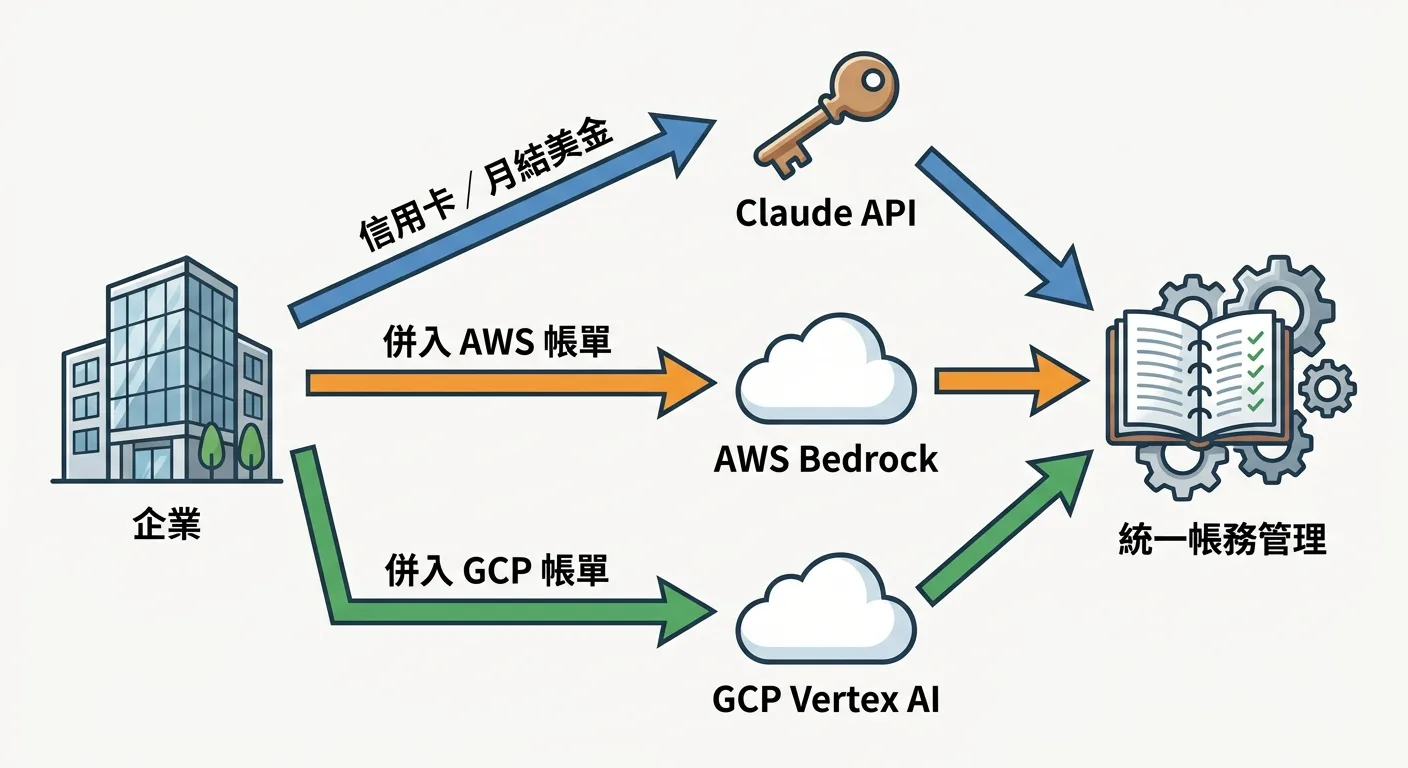
The most practically significant change for enterprise procurement this launch is speed of platform availability. New models used to take weeks to reach the cloud platforms; Fable 5 landed on AWS Bedrock (AWS What's New, 2026) and Google Cloud Vertex AI (Google Cloud Blog, 2026) on launch day, June 9.
The three access paths:
| Path | Billing | Best for |
|---|---|---|
| Claude API (first-party) | Credit card / monthly, USD | Direct integration, newest features first |
| AWS Bedrock | Folded into your AWS bill | Existing AWS commitments (EDP), unified billing |
| GCP Vertex AI | Folded into your GCP bill | GCP ecosystem, regional endpoints |
One pricing detail on the cloud versions: regional endpoints on Bedrock and Vertex carry a 10% premium over global endpoints — finance and healthcare buyers who need guaranteed data routing should budget for it (Anthropic Pricing, 2026). For the broader AWS AI landscape see our AWS AI Services Guide; for GCP, the Vertex AI Guide.
Getting Started with the Fable 5 API
From a procurement standpoint, three decision points differ from previous generations:
- Drop-in model ID:
claude-fable-5, fully compatible with the existing Claude API — in theory you change one model parameter. Don't actually ship that one-line change to production: the new tokenizer changes your token consumption profile, so measure in staging for a week first. - Monitor classifier fallbacks: if your business touches security research (e.g., interpreting vulnerability scan reports), some requests will be answered by Opus 4.8. The response metadata identifies the serving model — add a logging field and track your fallback rate.
- Evaluate on Batch first: run your offline eval set at half price ($5/$25), confirm the quality lift justifies the premium, then open up real-time traffic.
Full integration guidance (auth, SDKs, error handling, migrating existing Claude API code) lives in our Claude API Tutorial and API Integration Guide — Fable 5 calls work exactly like other Claude models; only the model ID and rates differ.
A Five-Step Migration Checklist from Opus 4.8
Our standard process when helping clients switch models — following it avoids ninety percent of migration surprises:
- Capture a baseline: save 500–1,000 representative requests and responses on your current model as a quality control group
- Measure tokens: recount the same batch with the new model's token counting — inflation varies by language and content structure (Chinese content usually lands below the 35% ceiling), so measure your own number
- Run evals on Batch: replay the control group on Fable 5 via the half-price Batch API; compare with human spot checks plus automated metrics
- Compute break-even: does the quality lift, converted into hours saved, exceed the bill increase? Tasks that don't clear the bar stay on the old model
- Canary rollout: route 10% of traffic, watch classifier fallback and error rates for a week, then expand
A full evaluation round on Batch typically costs less than 5% of a production month — money always worth spending.
Three Risk Checks Before You Commit Budget
Beyond selection and integration, put these three items on the table before sign-off:
Classifier fallback rate. If your content can trigger the safety classifiers (security research, biomedical), test the fallback ratio with real samples first. The most extreme case we've seen: a security-alert-analysis workload where eighty percent of requests fell back to Opus 4.8 — paying double for the capability you already had. Above roughly a 20% fallback rate, just use Opus 4.8 honestly.
Compounding bill inflation. The 2x rate and the up-to-35% token inflation multiply rather than add — the worst case is a 2.6x bill, not 2x. Use 2.6x as your stress-test ceiling and your measured inflation rate as the base case; it's far more robust than waving a single "double" number through finance.
Early-stage capacity and rate limits. A new flagship's rate limits and capacity allocations are typically conservative at launch. Important production traffic needs a degradation plan (falling back to Opus 4.8 is the ready-made option — it's literally how Anthropic's own classifiers are designed). For API key and usage governance fundamentals, see our API Key Management & Security Guide.
How Taiwanese Enterprises Can Buy Fable 5
Back to the three practical blockers we see most often in Taiwan:
Payment. Anthropic's first-party API still rejects many Taiwanese corporate credit cards — the new model didn't change that. It remains the most common procurement blocker among our clients (background in our Buying AI APIs in Taiwan guide).
Invoices. Buying directly from Anthropic or via overseas platforms doesn't get you a Taiwanese unified invoice (統一發票), which blocks standard expense workflows (solutions in our AI API Invoice Guide).
Multi-platform sprawl. Fable 5 now exists on three platforms, on top of whatever OpenAI and Gemini usage you already have — scattered accounts and bills are the norm (see AI API Management Platforms).
CloudInsight, as an enterprise procurement agent for AI APIs and cloud services, solves all three in one stop: NTD pricing, unified invoices, and consolidated billing across Claude / OpenAI / Gemini APIs plus AWS and GCP — with volume discounts. We completed supply-chain onboarding for Fable 5 on launch day; activation is available now.
A sensible adoption timeline, condensed from everything above:
| Phase | Action | When |
|---|---|---|
| Evaluate | Hands-on testing in the subscription window (through 6/22) | Week 1 |
| Validate | Offline evals on half-price Batch + measured token inflation | Weeks 2–3 |
| Pilot | Canary-route 10% of hard tasks, watch fallback rates | Weeks 4–5 |
| Launch | Finalize hybrid configuration, sign procurement (direct or reseller) | Week 6+ |
Every step has an exit — if evaluation fails, you stop at week 2 having spent only the eval budget. For the broader methodology, see Enterprise AI API Procurement and Enterprise LLM Adoption.
Ready to adopt Fable 5? From usage assessment and hybrid configuration to unified invoicing, CloudInsight handles enterprise AI API procurement end to end. Get an API token consultation, or browse our pricing plans.
Frequently Asked Questions
What is Claude Fable 5?
Claude Fable 5 is the flagship AI model Anthropic released on June 9, 2026 — the first Mythos-tier model (a tier above Opus) open to general users. It shares its underlying model with the restricted Claude Mythos 5; the difference is that Fable 5 ships with safety classifiers that route sensitive requests to Opus 4.8.
How much does the Fable 5 API cost?
Per Anthropic's official pricing page (June 2026): $10 per million input tokens and $50 per million output tokens — double Opus 4.8 ($5/$25). Prompt-cache hits cost $1, the Batch API is half price ($5/$25), and the 1M-token long context carries no premium.
How is Fable 5 different from Opus 4.8?
Different tiers: Fable 5 is Mythos-class, Opus 4.8 is Opus-class. The measured gap concentrates in hard tasks — SWE-Bench Pro 80.3% vs 69.2%, and FrontierCode Diamond 29.3% vs 13.4% (more than double). The price is also double, so ordinary workloads usually stay better-off on Opus 4.8.
How can Taiwanese enterprises buy Fable 5?
Three paths: Anthropic's first-party API (frequent credit-card rejections, no unified invoice), AWS Bedrock or GCP Vertex AI (requires existing cloud billing), or a Taiwanese reseller like CloudInsight — NTD pricing, unified invoices, consolidated multi-platform billing, and volume discounts.
Will Fable 5 replace Opus 4.8?
No — they coexist. Anthropic positions Fable 5 as a new tier above Opus rather than a successor, and Opus 4.8 remains in normal supply ($5/$25). The safety-classifier architecture itself depends on Opus 4.8 as the fallback model, so it isn't going anywhere soon.
Further Reading
- Fable 5 API Pricing Explained: Costs, Usage Scenarios & Taiwan Procurement
- Fable 5 vs Opus 4.8: Performance, Pricing, and Model Selection
- What Is the Mythos Model? Anthropic's Model Family and Fable 5 Explained
- Claude API Pricing | 2026 Anthropic API Costs & Money-Saving Tips
- How to Buy AI APIs in Taiwan? 2026 Complete Purchase & Payment Guide
- GPT-5 vs Claude Opus | 2026 In-Depth Review of the Two Flagship AI APIs
References
- Claude Fable 5 and Claude Mythos 5 — Anthropic (2026-06-09)
- Pricing — Claude API Docs (2026-06)
- Claude Fable 5 & Mythos 5 Benchmarks Explained — Vellum (2026-06)
- Anthropic's Claude Fable 5 is a version of Mythos the public can access today — TechCrunch (2026-06-09)
- Anthropic's Fable 5 can make weirdly fun video games — TechCrunch (2026-06-09)
- Anthropic spins a fable of a tamer, safer Mythos — The Register (2026-06-09)
- Claude Fable 5 now available on AWS — AWS What's New (2026-06-09)
- Claude Fable 5 on Google Cloud — Google Cloud Blog (2026-06-09)
Need Professional Cloud Advice?
Whether you're evaluating cloud platforms, optimizing existing architecture, or looking for cost-saving solutions, we can help
Book Free ConsultationRelated Articles
Fable 5 vs Opus 4.8 Complete Comparison 2026: Performance, Pricing & Selection Guide
Which should you choose in 2026 — Claude Fable 5 or Opus 4.8? SWE-Bench Pro 80.3% vs 69.2%, a doubled FrontierCode gap, but also double the price ($10/$50 vs $5/$25). A four-dimension comparison plus an enterprise decision tree: when upgrading pays, and when Opus 4.8 is plenty.
AI APIGPT-5.6 Sol / Terra / Luna: How to Choose a Tier, Where to Get It, and What Enterprises Should Watch
GPT-5.6 reached GA on July 9, 2026, launching Sol, Terra, and Luna at once, and has since landed on AWS Bedrock, Microsoft 365 Copilot, and Azure. This guide breaks down the three tiers, their official pricing ($5/$30, $2.50/$15, $1/$6), real cost math, and the billing, data-residency, and contract issues Taiwanese enterprises need to check.
AI APIClaude Fable 5 API Pricing Explained 2026: Costs, Usage Scenarios & Procurement for Taiwanese Enterprises
Claude Fable 5's official API pricing for 2026: $10 per million input tokens, $50 output — double Opus 4.8. This article includes three enterprise usage cost models, prompt-cache and Batch API saving strategies, the hidden cost of the new tokenizer, and unified-invoice procurement paths for Taiwan.