
OpenAI API Pricing Explained | 2026 Latest GPT-5.6 Pricing & Cost-Saving Strategies
Understand OpenAI API Pricing and Save Thousands of Dollars Per Month
Here's a harsh truth: over 60% of development teams choose the wrong model tier when using OpenAI API.
The result? Bills 3-10x higher than expected, without better outcomes. Even worse, many people don't even use the 50% Batch API discount, paying double for nothing.
This article lays out every model's pricing, billing mechanics, and cost-saving mechanisms from OpenAI. After reading, you'll know how to spend the least money for the best AI output.
Want OpenAI API enterprise discounts right away? Contact the CloudInsight team -- no credit card hassles, invoices included.
TL;DR
As of August 2026, OpenAI API input pricing ranges from $0.20 per million tokens (GPT-5.6 Luna and GPT-5.4 nano) to $30.00 (the Pro models). The current flagship family, GPT-5.6, was cut across the board in August and now comes in at Sol $4.00/$20.00, Terra $2.00/$12.00, and Luna $0.20/$1.20 (input/output per million tokens, sub-272K context). OpenAI states that Sol's promotional price holds "at least through November 21, 2026". By leveraging Batch API (about 50% off) and a tiered model strategy, enterprises can save 40-60% on costs.
OpenAI API Complete Pricing Table | Token Unit Prices by Model
Answer-First: As of August 2026, OpenAI offers nine main text generation models, with input prices spanning roughly 150x from cheapest to most expensive. The current mainstream family is GPT-5.6, which went GA on 2026-07-09 in three tiers -- Sol, Terra, and Luna -- and was repriced downward across all three in August 2026. Luna's input is just $0.20 per million tokens, making it the best value of the new generation. (Source: OpenAI official pricing page)
Here is the complete pricing for all major OpenAI models:
Text Generation Models (per million tokens)
| Model | Input | Output | Best For |
|---|---|---|---|
| GPT-5.6 Sol | $4.00 | $20.00 | Flagship: complex reasoning, hard coding tasks |
| GPT-5.6 Terra | $2.00 | $12.00 | Balanced: general enterprise workhorse |
| GPT-5.6 Luna | $0.20 | $1.20 | Best value: high-volume batch work |
| GPT-5.5 | $5.00 | $30.00 | Previous-generation flagship |
| GPT-5.5 Pro | $30.00 | $180.00 | Top-tier reasoning |
| GPT-5.4 | $2.50 | $15.00 | Previous-generation balanced tier |
| GPT-5.4 mini | $0.75 | $4.50 | Lightweight tasks |
| GPT-5.4 nano | $0.20 | $1.25 | Lowest unit price: classification, formatting |
| GPT-5.4 Pro | $30.00 | $180.00 | Previous-generation top-tier reasoning |
Billing Modes
| Mode | Rate | Notes |
|---|---|---|
| Standard | 1x | Regular synchronous calls |
| Batch | About 50% off | Non-real-time work, up to 24-hour turnaround |
| Priority | 2-4x standard | Lower latency, noticeably more expensive |
Multimodal & Specialized Models
Unit prices for image generation, speech-to-text, and TTS models change frequently, so this article does not reproduce numbers that may already be stale. Check the official pricing page instead: https://developers.openai.com/api/docs/pricing. Context window sizes and fine-tuning rates should likewise be taken from that page.
Note: The above prices are as of August 2026 and apply to sub-272K context. GPT-5.6 has a separate long-context tier (Sol $8.00/$30.00, Terra $4.00/$18.00, Luna $0.40/$1.80) that kicks in past the threshold. Historically, OpenAI adjusts prices every 3-6 months, usually with reductions.
How to Read This Generation's Pricing
GPT-5.6 reached GA on 2026-07-09, replacing GPT-5.5 and GPT-5.4 as the mainstream lineup. One pattern stands out in the table:
When GPT-5.6 first shipped it was "a newer model at the same price" -- Sol matched the previous flagship GPT-5.5, and Terra matched GPT-5.4. After OpenAI cut all three tiers in August 2026, it became "newer and cheaper":
- Sol at $4.00/$20.00 is 20% / 33% cheaper than GPT-5.5, which still sits at $5.00/$30.00
- Terra at $2.00/$12.00 is 20% / 20% cheaper than GPT-5.4, which still sits at $2.50/$15.00
- Luna at $0.20/$1.20 now matches the cheapest model, GPT-5.4 nano, on input ($0.20) and undercuts it on output ($1.20 vs $1.25)
In other words, if you are still on GPT-5.4 or GPT-5.5, moving to the matching Terra or Sol tier does not just cost you nothing extra -- it cuts the bill by at least 20%.
Promotional or permanent? OpenAI's pricing page states for Sol that "promotional pricing is available at least through November 21, 2026." Prices could revert after that, so factor it into any long-term quote.
As for the $30.00/$180.00 Pro models, they cost 7.5x Sol and 150x Luna. Unless a task genuinely needs top-tier reasoning, don't make Pro your default.
OpenAI API Free Credits & Trial Plans | The Smartest Way for Beginners to Start
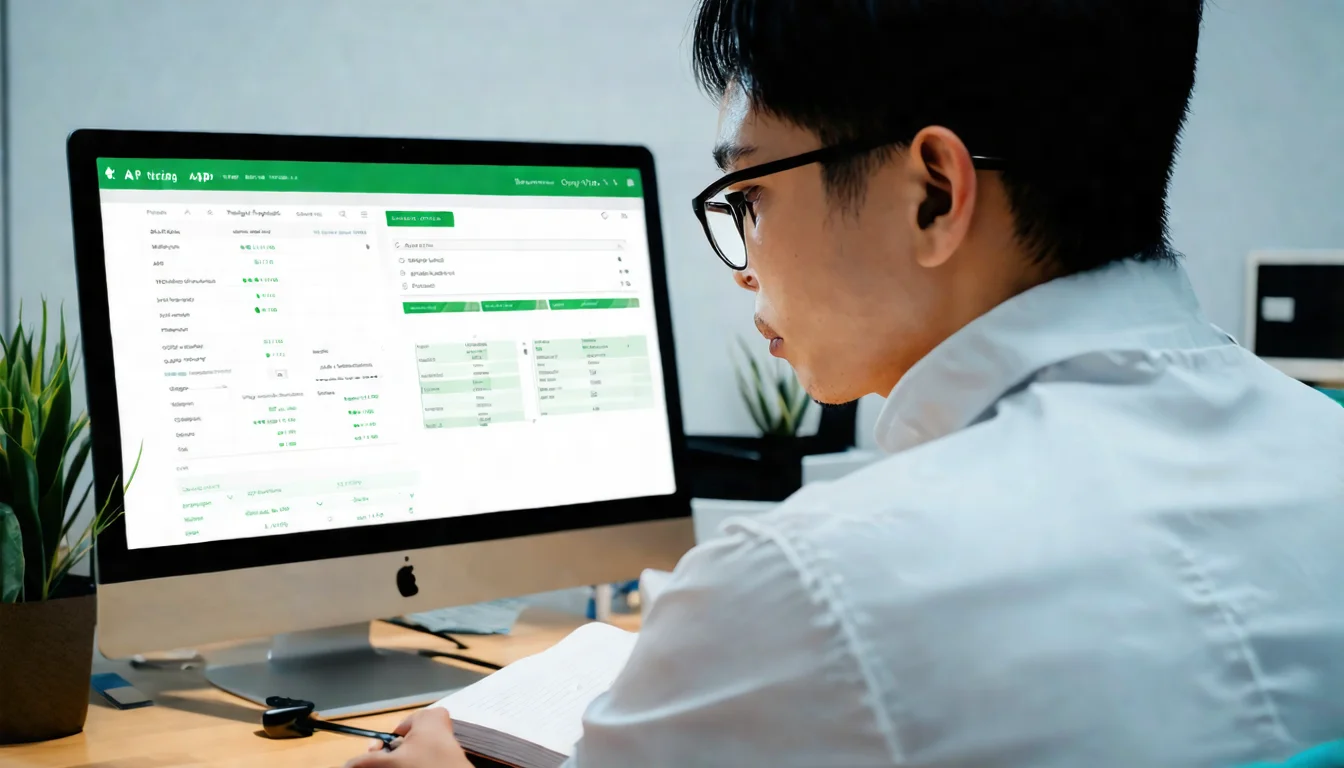
Answer-First: The size of OpenAI's trial credit, how long it lasts, and the Free Tier rate limits (RPM/TPM/RPD) all change with policy and are not identical across accounts. Go by what your own account dashboard shows rather than copying older figures floating around the web.
How to Check Your Free Credits
After registering for an OpenAI Platform account, whether a trial credit is granted -- and how much, and for how long -- has been adjusted several times and may vary by region and account type. Before you scope a proof of concept, open the Billing page in the Platform dashboard and confirm what your account actually received.
A few principles do hold over time:
- Trial credits expire: unused balances are not refunded, so don't leave your PoC to the last minute
- API only: credits cannot be applied to consumer ChatGPT subscriptions (Plus/Pro/Go)
- Free Tier limits are tight: RPM (requests per minute) and TPM (tokens per minute) sit far below paid tiers, and the newest models are frequently not available on the Free Tier at all
How much does a ChatGPT subscription cost? That is a consumer product billed separately from the API. Please refer to OpenAI's official pricing page: https://openai.com/chatgpt/pricing/
Where to Look Up Rate Limits by Tier
OpenAI sets rate limits per account tier and per model, and they shift as models are revised. The reliable approach is to sign in to OpenAI Platform and open the Limits page in your account settings to see the actual RPM/TPM/RPD your tier gets for each model -- those are the numbers that will apply to you.
Requirements to Upgrade from Free to Tier 1
- Bind a valid payment method (credit or debit card)
- Complete an actual top-up
After upgrading, rate limits increase dramatically, and the newest models (such as the GPT-5.6 family) become available to your account.
A common issue for many users: OpenAI's acceptance of certain credit cards can be unstable. Some cards work, others get declined. Using a CloudInsight purchasing service is the most hassle-free approach -- no credit card worries, plus you get invoices.
Want to learn about more free AI API options? Check out Free AI API Recommendations & Limitations.
GPT-5.6 Sol vs Terra vs Luna Cost-Benefit Analysis | Which Tasks Deserve the Flagship?
Answer-First: The three GPT-5.6 tiers sit at fixed multiples of one another: Sol is 2x Terra, Terra is 2.5x Luna, and Sol is exactly 5x Luna. That means moving half your workload from Sol down to Luna cuts that half's cost to one-fifth. The real question is whether the task needs the flagship at all.
Many teams switch their entire pipeline to Sol as soon as they hear it's the "latest and greatest."
This is an expensive mistake.
On quality scores: An earlier version of this article listed model quality ratings such as "9.5/10." Those scores had no verifiable source and have been removed entirely. Benchmark quality on your own data instead -- running the same real prompts through each tier tells you more than any published score.
Cost Comparison: Same Task, Different Tiers
Assume a single call consumes 3,000 input tokens and 1,000 output tokens (roughly a medium-length system prompt plus a short document in and out). Worked line by line, the per-call cost is:
| Model | Input Cost | Output Cost | Per-Call Total | vs Luna |
|---|---|---|---|---|
| GPT-5.5 Pro | 3,000 × $30.00/1M = $0.0900 | 1,000 × $180.00/1M = $0.1800 | $0.2700 | 150x |
| GPT-5.6 Sol | 3,000 × $4.00/1M = $0.0120 | 1,000 × $20.00/1M = $0.0200 | $0.0320 | 17.8x |
| GPT-5.6 Terra | 3,000 × $2.00/1M = $0.0060 | 1,000 × $12.00/1M = $0.0120 | $0.0180 | 10x |
| GPT-5.6 Luna | 3,000 × $0.20/1M = $0.0006 | 1,000 × $1.20/1M = $0.0012 | $0.0018 | 1x |
| GPT-5.4 mini | 3,000 × $0.75/1M = $0.0023 | 1,000 × $4.50/1M = $0.0045 | $0.0068 | 3.8x |
| GPT-5.4 nano | 3,000 × $0.20/1M = $0.0006 | 1,000 × $1.25/1M = $0.0013 | $0.0019 | 1.03x |
Key findings:
- For article summaries, translation, and customer service replies, Terra -- often even Luna -- is already good enough
- Only math-heavy reasoning and complex code generation justify Sol or Pro pricing
- If your business is primarily text processing, swapping Sol for Luna cuts that spend by 80%
At Monthly Scale
Same workload, now at 10,000 calls per day (30 million input tokens and 10 million output tokens daily), over 30 days:
| Model | Daily Cost | Monthly Cost |
|---|---|---|
| GPT-5.6 Sol | 30 × $4.00 + 10 × $20.00 = $320 | $9,600 |
| GPT-5.6 Terra | 30 × $2.00 + 10 × $12.00 = $180 | $5,400 |
| GPT-5.6 Luna | 30 × $0.20 + 10 × $1.20 = $18 | $540 |
Dropping from Terra to Luna saves $4,860 per month (90%). If that workload is non-real-time as well, applying the Batch API's roughly 50% discount brings Luna down to about $270 per month.
Don't Overlook GPT-5.4 nano
Going further, many basic tasks can be handled by GPT-5.4 nano:
- Text classification
- Sentiment analysis
- Simple summarization
- Data format conversion
GPT-5.4 nano costs one-tenth of Terra on input ($0.20 vs $2.00) and roughly one-tenth on output ($1.25 vs $12.00), yet for classification, sentiment analysis, and simple summaries the quality gap is usually invisible to end users.
Reassess this as of August 2026: after the price cut Luna sits at $0.20/$1.20 -- level with nano on input and cheaper on output ($1.20 vs $1.25). The old reason to fall back to a previous-generation nano model to save money has effectively disappeared; the same budget now buys the current-generation Luna.
Want to see cost-benefit comparisons for other AI APIs? Check out AI API Pricing Comparison Guide.
OpenAI API Billing & Invoice Management | Complete Token Calculation Tutorial
Answer-First: OpenAI charges separately for input and output tokens, with output typically costing 5x to 6x input (GPT-5.6 Terra, for example, is $2.00 vs $12.00 -- exactly 6x; Sol is $4.00 vs $20.00, or 5x). Use the official tiktoken tool to estimate costs in advance. Setting a monthly budget cap is the best insurance against billing surprises. (Source: OpenAI official pricing page)
How Token Calculation Works
Tokens are not the same as word count. Tokenization differs between languages:
| Language | 1000 Tokens Approximately | Notes |
|---|---|---|
| English | 750 words | More token-efficient |
| Chinese | 500 characters | Consumes more tokens |
| Code | Varies by language | Python is more efficient, Java less so |
Useful tool: tiktoken
OpenAI provides the open-source tiktoken tool, which lets you calculate how many tokens your prompt will consume before sending an API request.
pip install tiktoken
This is the first step to cost control -- you can't manage what you can't see.
Three Steps to Billing Management
Step 1: Set Monthly Budget Caps
In OpenAI Platform -> Settings -> Billing -> Usage Limits, set a Hard Limit and Soft Limit.
- Hard Limit: API stops when reached
- Soft Limit: Email notification sent when reached
Recommended setup: Soft Limit at 80% of budget, Hard Limit at 100%.
Step 2: Monitor Daily Usage
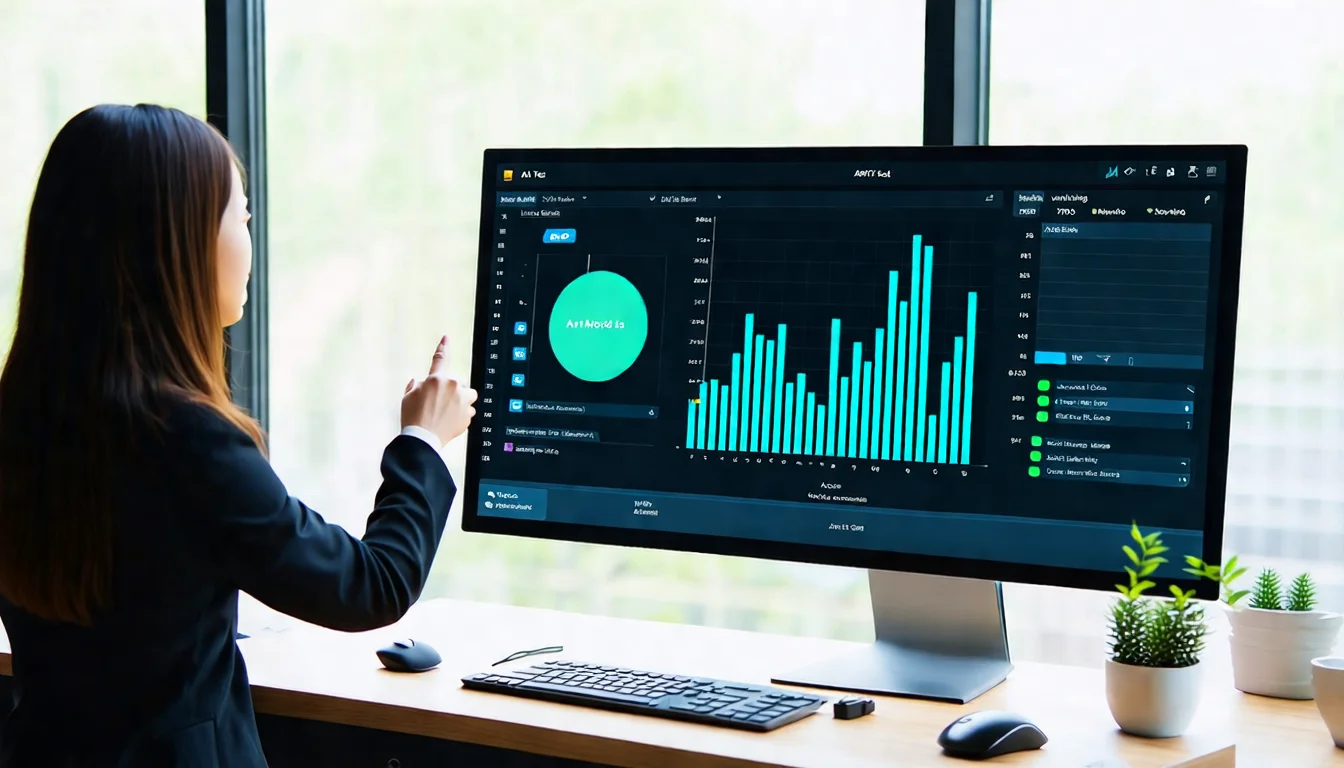
The OpenAI Dashboard provides daily usage charts, viewable by model and date. We recommend spending 5 minutes each week reviewing this.
Step 3: Analyze Token Consumption Distribution
Identify which model and API endpoint consumes the most tokens. Typically, 80% of costs come from 20% of API calls -- find that 20%, and you've found the biggest savings opportunity.
Common Hidden Costs in OpenAI
Several easily overlooked charges:
- Failed retries: Tokens are still counted after automatic retries on API errors
- System Prompt: Sent with every API call; if your System Prompt is long, this adds up
- Vision features: Image analysis consumes far more tokens than text
- Priority mode: Priority processing runs 2-4x standard pricing -- leave it off unless latency genuinely matters
Finding OpenAI API billing too complex? Let CloudInsight handle it
CloudInsight offers OpenAI API enterprise purchasing services:
- Enterprise-exclusive discounts, better than official pricing
- Unified billing management, no need to calculate tokens yourself
- Invoices included, making expense reporting easy
OpenAI API Cost-Saving Strategies | Complete Guide to Batch API & Cached Input
Answer-First: By leveraging OpenAI's Batch API (about 50% off) and Cached Input, combined with a model downgrade strategy (Sol -> Terra -> Luna), enterprises can save up to 70% on API costs. These features require no extra payment -- just modify your API call method to activate them.
Batch API: A Must for Non-Real-Time Tasks
If your tasks don't require instant responses (e.g., daily report generation, batch translation, bulk data analysis), always use Batch API.
Advantages:
- Costs roughly 50% of standard pricing
- Results within 24 hours max
- Submit thousands of requests at once
Ideal scenarios:
- Daily news summary generation
- Batch product description translation
- User review sentiment analysis
- Bulk document classification
Cached Input: Automatic Savings on Repeated Prompts
If your API calls include a fixed System Prompt (e.g., customer service bot persona settings), OpenAI automatically caches that portion and bills cache-hit input tokens at a discounted rate (the exact discount is whatever the official pricing page states).
Example: Your System Prompt is 2,000 tokens, and you make 10,000 calls per day.
- That means 2,000 × 10,000 = 20 million tokens per day come from an identical prefix
- Every call after the first -- 9,999 of them -- has a chance of hitting the cache for those 2,000 tokens and being billed at the discounted rate
Simply keeping the System Prompt at the very front of the prompt so it can be cached is the lowest-effort optimization available. Conversely, putting variable content (timestamps, usernames) at the front invalidates the whole cached prefix -- an extremely common mistake.
Model Tiering: The Single Biggest Lever
As calculated above, moving the same workload from Sol to Luna leaves you paying one-fifth. In practice, route by task:
- Hard reasoning and code generation -> Sol
- General generation, summarization, customer service -> Terra or Luna
- Classification, tagging, format conversion -> GPT-5.4 mini / nano
Fine-tuning: The Ultimate Long-Term Cost Saver
If you have a fixed, highly repetitive task (e.g., extracting data in a specific format), consider fine-tuning.
Fine-tuning a smaller model can approach large-model quality on that narrow task at far lower inference cost. Which models are fine-tunable, and the training and inference rates, are listed on the official pricing page.
Drawback: Fine-tuning requires preparing training data, with upfront time and technical costs. Not suitable for frequently changing requirements.
Want to learn more comprehensive API cost optimization strategies? Check out LLM API Cost Optimization Practical Guide.
Want to know how to save on Claude API? Claude API Pricing & Cost-Saving Tips includes a tutorial on saving 90% with Prompt Caching.
FAQ: OpenAI API Pricing Common Questions
Is OpenAI API completely free?
No. OpenAI may grant new accounts a time-limited trial credit, but the amount, validity period, and eligible regions change with policy -- go by what your account dashboard shows. The Free Tier has strict rate limits, and the newest models (such as the GPT-5.6 family) are typically not available on it. Trial credits are fine for learning and small-scale testing, but production environments require payment.
How do I check how much I've spent on OpenAI API?
Log in to OpenAI Platform (platform.openai.com), go to Settings -> Billing -> Usage, where you can see daily usage details and cost statistics. We recommend setting both Soft Limit (notification threshold) and Hard Limit (cutoff threshold) to prevent overspending.
Can I pay for OpenAI API with my credit card?
Yes, but issues may arise depending on your region and card issuer. OpenAI accepts Visa and Mastercard international credit cards, but some cards may be declined. If you encounter payment issues, try a different card or use CloudInsight's purchasing service to resolve it while also receiving invoices.
How much do GPT-5.6 Sol, Terra, and Luna differ in cost?
Per million tokens, Sol is $4.00 input / $20.00 output, Terra is $2.00 / $12.00, and Luna is $0.20 / $1.20. Sol costs 2x Terra and 20x Luna on input, but about 1.7x Terra and 17x Luna on output -- after the August 2026 cut the input and output multiples no longer match, because Luna's output price fell the furthest. Most general tasks run fine on Terra or Luna, so Sol is rarely mandatory.
How much is a ChatGPT subscription, and can it offset API costs?
It cannot offset API costs -- ChatGPT subscriptions and the API are billed as two separate systems. For subscription pricing, refer to OpenAI's official pricing page: https://openai.com/chatgpt/pricing/
How do I use OpenAI Batch API? Does it really save half the cost?
Yes, Batch API runs at roughly 50% of standard pricing. Simply package multiple API requests into a JSONL file and upload it -- OpenAI processes everything within 24 hours. Ideal for daily reports, batch translations, and other non-real-time tasks. Note: Batch API doesn't guarantee processing order and doesn't support streaming output.
Choose the Right OpenAI Model & Savings Strategy | Make Every API Dollar Count
The OpenAI API world looks complex, but the core logic is simple:
Use the cheapest model that meets your quality needs.
Three specific action items:
- Test with GPT-5.6 Luna or GPT-5.4 nano first -- if quality is sufficient, there's no need to move up to Sol
- Enable Batch API -- use batch mode for all non-real-time tasks, and confirm Priority isn't switched on by accident
- Set budget caps -- never leave your billing in an "unlimited" state
If you're an enterprise user dealing with high API volume, credit card payment difficulties, or invoice requirements, the most efficient approach is to work with a local reseller.
Want to see a full three-platform pricing comparison? Check out AI API Pricing Comparison Guide. Want to know which free AI APIs you can try first? Check out Free AI API Recommendations & Limitations.
Want a deeper dive into the complete OpenAI ecosystem? Check out OpenAI API Complete Guide.
Stop Worrying About OpenAI API Costs
CloudInsight is a local AI API enterprise purchasing agent:
- Enterprise bulk discounts, better than OpenAI's official pricing
- Unified invoicing, solving overseas procurement expense reporting
- Chinese-language instant technical support -- no waiting until tomorrow
Get a quote for enterprise plans -> | Join LINE for instant consultation ->
Further Reading
References
- OpenAI API Pricing (official pricing page)
- ChatGPT Pricing (consumer subscription pricing)
- OpenAI - Rate Limits Documentation
- OpenAI - Batch API Documentation
- OpenAI - Prompt Caching Documentation
- OpenAI - tiktoken GitHub Repository
Need Professional Cloud Advice?
Whether you're evaluating cloud platforms, optimizing existing architecture, or looking for cost-saving solutions, we can help
Book Free ConsultationRelated Articles
Claude API Pricing | 2026 Anthropic API Costs & Money-Saving Tips Complete Guide
2026 Claude API pricing complete guide! Compare Fable 5, Opus 5, Sonnet 5, and Haiku 4.5 model costs, see why Sonnet 5's $2/$10 is the standard price now that the previously announced increase has been cancelled, and learn Batch API 50% discount and Prompt Caching 90% savings strategies to control your Anthropic API costs.
AI APIGPT-5.6 Sol, Terra, Luna: Which Tier Should You Pick?
GPT-5.6 reached GA on July 9, 2026, launching Sol, Terra, and Luna at once, and has since landed on AWS Bedrock, Microsoft 365 Copilot, and Azure. This guide breaks down the three tiers, their latest official pricing after the August 2026 cut ($4/$20, $2/$12, $0.20/$1.20), real cost math, and the billing, data-residency, and contract issues Taiwanese enterprises need to check.
AI APIClaude Fable 5 API Pricing Explained 2026: Costs, Usage Scenarios & Procurement for Taiwanese Enterprises
Claude Fable 5's official API pricing for 2026: $10 per million input tokens, $50 output — double Opus 4.8. This article includes three enterprise usage cost models, prompt-cache and Batch API saving strategies, the hidden cost of the new tokenizer, and unified-invoice procurement paths for Taiwan.