
What Is CNCF? Cloud Native Landscape and Trail Map Complete Guide (2026)
The first time you see the CNCF Landscape diagram, you'll probably be shocked: over a thousand logos packed together—what is this? Actually, this diagram represents the complete picture of the Cloud Native ecosystem.
CNCF is the core organization driving cloud native technology, with Kubernetes being its most famous project. This article will introduce you to CNCF's role, help you understand the Landscape classification, and show how to use the Trail Map to plan your learning path.
CNCF Organization Introduction
What Is the Cloud Native Computing Foundation?
CNCF (Cloud Native Computing Foundation) is a non-profit organization under the Linux Foundation, established in July 2015. Google donated the Kubernetes project as CNCF's founding project, establishing the organization's technical foundation.
CNCF's official mission is:
To make cloud native computing ubiquitous.
In plain language: promote containerization, microservices, dynamic orchestration, and other cloud native technologies to make these technologies industry standards.
CNCF's Mission and Role
Roles CNCF plays:
1. Project Incubator
CNCF accepts open-source project applications, providing neutral governance frameworks and resource support. Currently manages over 100 projects, including well-known projects like Kubernetes, Prometheus, Envoy, and Helm.
2. Standards Maker
CNCF promotes cloud native technology standardization, such as:
- OCI (Open Container Initiative): Container format standard
- OpenTelemetry: Observability standard
- CloudEvents: Event format standard
3. Community Hub
CNCF hosts KubeCon + CloudNativeCon annually, the world's largest Kubernetes and cloud native technology conference. There are also regional Kubernetes Community Days and online events.
4. Certification Body
CNCF provides multiple professional certifications:
- CKA (Certified Kubernetes Administrator)
- CKAD (Certified Kubernetes Application Developer)
- CKS (Certified Kubernetes Security Specialist)
CNCF Membership and Governance
CNCF membership is divided into several tiers:
| Tier | Annual Fee (approx.) | Representative Companies |
|---|---|---|
| Platinum | $370,000 | Google, AWS, Microsoft, Alibaba |
| Gold | $120,000 | VMware, Red Hat, IBM |
| Silver | $7,000-50,000 | Small-medium tech companies |
| End User | Free | Companies using cloud native technology |
Platinum members can have a seat on the TOC (Technical Oversight Committee), influencing CNCF's technical direction. But CNCF governance emphasizes neutrality, avoiding domination by any single vendor.
Want to understand complete Cloud Native concepts? Please refer to Cloud Native Complete Guide.
CNCF Project Maturity Levels
CNCF categorizes projects into three maturity levels:
Graduated Projects
Graduated is the highest level, indicating projects have:
- Been widely adopted at scale
- Active contributor community
- Passed security audits
- Achieved production-ready quality
Major Graduated Projects (selection — see the CNCF project list for the full set):
| Project | Purpose | Donated By |
|---|---|---|
| Kubernetes | Container orchestration | |
| Prometheus | Monitoring and alerting | SoundCloud |
| Envoy | Service proxy | Lyft |
| CoreDNS | DNS service | - |
| containerd | Container runtime | Docker |
| Fluentd | Log collection | Treasure Data |
| Jaeger | Distributed tracing | Uber |
| Helm | Package management | Deis/Microsoft |
| etcd | Distributed key-value store | CoreOS |
| Argo | GitOps workflows | Intuit |
| Flux | GitOps continuous delivery | Weaveworks |
| Linkerd | Service mesh | Buoyant |
| OpenTelemetry | Observability framework | - |
| Kyverno | Kubernetes policy engine | Nirmata |
| Cilium | eBPF networking and security | Isovalent |
| Istio | Service mesh |
Incubating Projects
Incubating indicates projects are growing rapidly with potential to become Graduated:
- Adopted by multiple enterprises
- Stable contributor team
- Security audit in progress or completed
Representative Incubating Projects:
- gRPC: High-performance RPC framework
- NATS: Messaging system
- Backstage: Developer portal platform
- KubeVirt: Running virtual machines on Kubernetes
- Tekton: Kubernetes-native CI/CD pipelines
- Thanos: Long-term storage for Prometheus
Sandbox Projects
Sandbox is the entry level, indicating projects:
- Align with CNCF's mission
- Have growth potential
- Still in early stages
Sandbox has the most projects, over 50. Suitable for technology exploration but not recommended for direct production use.
Project Selection Recommendations:
| Use Case | Recommendation |
|---|---|
| Production environment | Prefer Graduated projects |
| New project evaluation | Can consider Incubating projects |
| Technical research | Can try Sandbox projects |
Cloud Native Landscape Guide
What Is the Landscape?
CNCF Landscape is a visual map of the cloud native ecosystem, containing 1,000+ projects and products. Its purposes are:
- Present the complete picture of the Cloud Native ecosystem
- Help users find suitable tools
- Track ecosystem development trends
You can interactively browse this map at landscape.cncf.io.
Landscape Category Explanations
The Landscape categorizes tools into several major categories:
1. App Definition and Development
| Subcategory | Representative Tools |
|---|---|
| Database | PostgreSQL, MongoDB, TiDB |
| Streaming & Messaging | Kafka, NATS, RabbitMQ |
| Application Definition | Helm, Kustomize |
| CI/CD | Argo CD, Tekton, Jenkins X |
2. Orchestration & Management
| Subcategory | Representative Tools |
|---|---|
| Scheduling & Orchestration | Kubernetes, Nomad |
| Coordination & Service Discovery | etcd, Consul, CoreDNS |
| Service Proxy | Envoy, Nginx, HAProxy |
| API Gateway | Kong, Ambassador, APISIX |
| Service Mesh | Istio, Linkerd, Cilium |
3. Runtime
| Subcategory | Representative Tools |
|---|---|
| Container Runtime | containerd, CRI-O |
| Cloud Native Storage | Rook, Longhorn, OpenEBS |
| Cloud Native Network | Calico, Cilium, Flannel |
4. Provisioning
| Subcategory | Representative Tools |
|---|---|
| Automation & Configuration | Terraform, Pulumi, Ansible |
| Container Registry | Harbor, Quay |
| Security & Compliance | OPA, Falco, Trivy |
| Key Management | Vault, Sealed Secrets |
5. Observability and Analysis
| Subcategory | Representative Tools |
|---|---|
| Monitoring | Prometheus, Datadog, Grafana |
| Logging | Fluentd, Loki, Elasticsearch |
| Tracing | Jaeger, Zipkin, Tempo |
| Chaos Engineering | Chaos Mesh, Litmus |
How to Use the Landscape to Choose Tools
With so many tools on the Landscape, how do you choose?
Step 1: Identify Your Requirement Category
First clarify what problem you're solving. Is it monitoring? Logging? Or CI/CD? Find the corresponding category.
Step 2: Prioritize CNCF Projects
Projects with blue frames on the Landscape are CNCF projects. Prioritize these because:
- Community support
- Follow open standards
- Not locked to single vendor
Step 3: Check Maturity
Click in to see project maturity (Graduated > Incubating > Sandbox). Prefer Graduated for production environments.
Step 4: Evaluate Integration
See if the tool is compatible with your existing tech stack. For example, if you use Kubernetes, choose K8s native tools.
So many CNCF tools, don't know which to choose? Schedule a free consultation and let experienced people help you evaluate.
Cloud Native Trail Map
What Is the Trail Map?
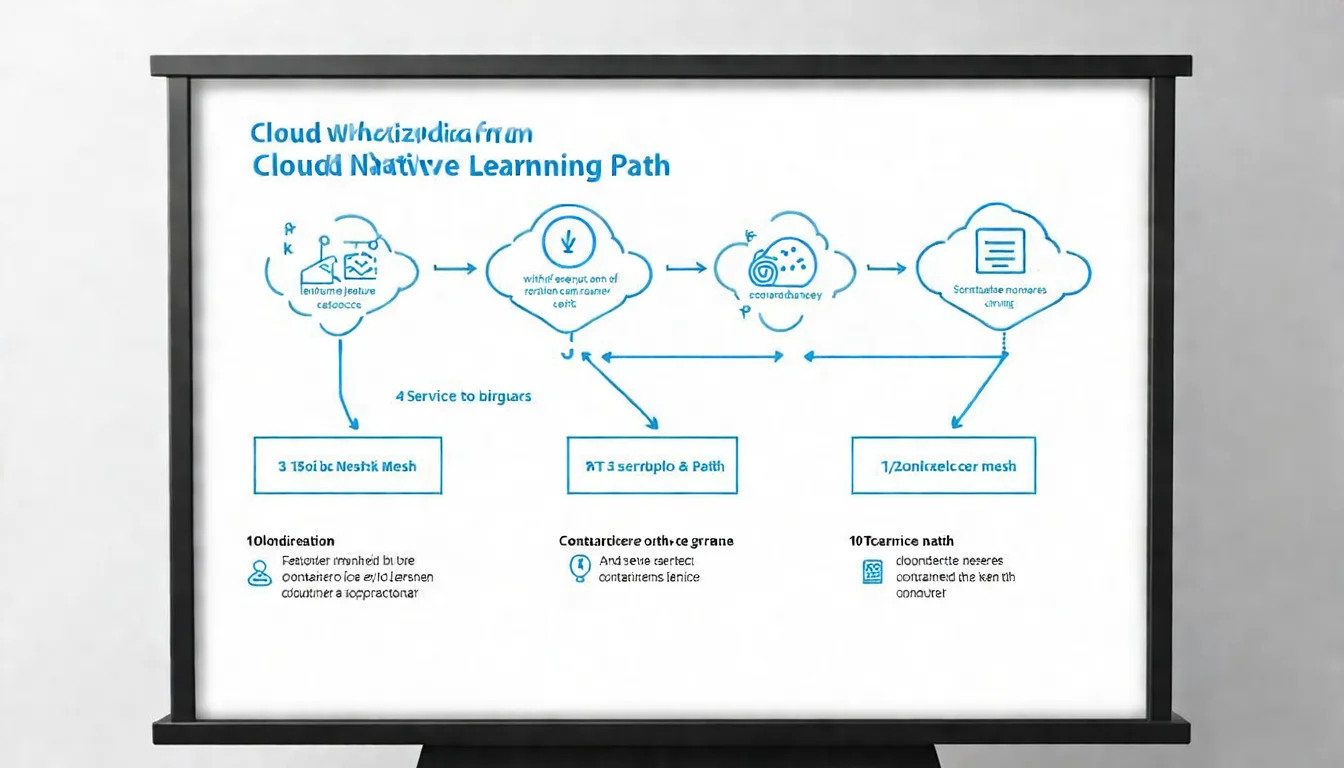
CNCF Trail Map is a learning roadmap that helps beginners learn Cloud Native technologies in a reasonable order. It divides the learning process into several phases, each with clear goals and recommended tools.
Learning Path Recommendations
Trail Map recommended learning order:
Phase 1: Containerization
Goal: Package applications into containers
Recommended Tools:
- Docker: Essential for containerization beginners
- Podman: Docker alternative, daemonless
Learning Focus:
- Writing Dockerfiles
- Building and pushing images
- Container lifecycle management
Phase 2: CI/CD (Continuous Integration/Continuous Deployment)
Goal: Automate build and deployment processes
Recommended Tools:
- GitHub Actions: Built into GitHub, easy to start
- GitLab CI: Full-featured CI/CD platform
- Argo CD: Kubernetes native GitOps tool
Learning Focus:
- Building pipelines
- Automated testing
- Continuous deployment to various environments
Phase 3: Container Orchestration
Goal: Manage large-scale container deployments
Recommended Tools:
- Kubernetes: De facto standard, must learn
- Helm: K8s package management tool
Learning Focus:
- K8s core concepts (Pod, Deployment, Service)
- Cluster management
- Resource scheduling
Deep dive into Kubernetes? Please refer to Cloud Native Tech Stack Introduction.
Phase 4: Observability
Goal: Monitor and debug distributed systems
Recommended Tools:
- Prometheus + Grafana: Metrics monitoring
- Jaeger: Distributed tracing
- Fluentd + Loki: Log collection
Learning Focus:
- Metrics collection and alerting
- Distributed tracing implementation
- Log aggregation and search
Phase 5: Service Mesh
Goal: Handle inter-service communication
Recommended Tools:
- Istio: Most complete features, but complex
- Linkerd: Lightweight, excellent performance
- Cilium: Based on eBPF, exceptional performance
Learning Focus:
- Traffic management
- Inter-service security (mTLS)
- Observability enhancement
Where to Start?
If you're a complete beginner:
- First learn Docker, containerize a simple application
- Use Docker Compose to manage multi-container applications
- Then learn Kubernetes basics
If you already know Docker:
- Directly learn Kubernetes
- Pair with Helm for deployment management
- Add monitoring and logging
If you already know Kubernetes:
- Deep dive into observability
- Evaluate if Service Mesh is needed
- Optimize CI/CD processes
Important CNCF Project Introductions
Kubernetes
Kubernetes (abbreviated K8s) is CNCF's most important project and the core of Cloud Native.
Key Features:
- Automated container deployment and scaling
- Service discovery and load balancing
- Self-healing capabilities
- Declarative configuration management
Kubernetes today:
- Over 80% market share
- All major clouds support managed K8s services
- Ecosystem continues to expand
Prometheus
Prometheus is the standard monitoring solution for cloud native environments.
Key Features:
- Multi-dimensional data model
- PromQL query language
- Pull-based data collection
- Built-in alerting functionality
Common Pairings:
- Prometheus + Grafana = Monitoring dashboards
- Prometheus + Alertmanager = Alert management
Envoy
Envoy is a high-performance service proxy developed by Lyft.
Key Features:
- L7 load balancing
- Rich observability
- Dynamic configuration
- Multi-protocol support (HTTP/2, gRPC)
Use Cases:
- Service Mesh data plane (Istio, Cilium both use Envoy)
- API Gateway
- Edge proxy
Argo
The Argo project family focuses on workflows and GitOps on Kubernetes.
Main Components:
- Argo CD: GitOps continuous deployment
- Argo Workflows: Container-native workflow engine
- Argo Rollouts: Progressive delivery (canary, blue-green deployment)
- Argo Events: Event-driven automation
OpenTelemetry
OpenTelemetry (OTel) is CNCF's observability standard project, merging OpenTracing and OpenCensus.
Coverage:
- Traces (distributed tracing)
- Metrics
- Logs
Why Important:
- Vendor-neutral standard
- Avoid monitoring tool lock-in
- Unified SDK and API
CNCF Certifications and Events
Professional Certifications
Kubernetes certifications offered by CNCF:
| Certification | Target Audience | Exam Duration | Cost |
|---|---|---|---|
| CKA | Cluster administrators | 2 hours | $395 |
| CKAD | Application developers | 2 hours | $395 |
| CKS | Security specialists | 2 hours | $395 |
Exam Characteristics:
- Practical exam, not multiple choice
- Operate on real K8s clusters
- Can reference official documentation
Preparation Recommendations:
- Have actual hands-on experience first
- Practice with killer.sh
- Be familiar with kubectl and vim
Community Events
KubeCon + CloudNativeCon
The world's largest Kubernetes conference, held annually in North America, Europe, and China. Content includes:
- Technical talks
- Project updates
- Vendor exhibitions
- Community networking
Kubernetes Community Days
Regional events hosted by local communities, smaller scale but easier to attend. Taiwan also has Cloud Native Taiwan User Group hosting regular meetups.
Online Resources
- CNCF YouTube channel: Tons of technical talk videos
- Kubernetes Slack: Official community discussions
- CNCF Blog: Latest news and case studies
FAQ
Q1: What's the relationship between CNCF and Linux Foundation?
CNCF is a sub-foundation under the Linux Foundation (LF). LF has other sub-foundations, such as OpenJS Foundation (manages Node.js, jQuery) and LF AI & Data (manages AI-related projects).
Q2: Are all CNCF projects free?
Yes, CNCF projects are all open-source projects that can be used for free. But some projects have commercial companies offering paid enterprise versions or managed services.
Q3: Can non-CNCF projects on the Landscape be trusted?
Projects on the Landscape aren't necessarily CNCF certified. Projects without blue frames need self-evaluation of their maturity and community activity.
Q4: Do I have to get CKA certified to learn Cloud Native?
Not necessarily. CKA is certification for managing Kubernetes clusters—if you're a developer, CKAD might be more suitable. If you use cloud-managed K8s (EKS, GKE), some CKA content may not apply.
Q5: CNCF projects update too fast, how do I keep up?
Focus on core projects (Kubernetes, Prometheus). Follow CNCF Blog and KubeCon talks to understand the big picture. You don't need to research every new project.
Next Steps
The CNCF ecosystem is vast—you don't need to learn everything at once. Recommend starting with the Trail Map order, gradually going deeper based on actual needs.
Further learning:
- Back to Core Concepts: Cloud Native Complete Guide
- Deep Dive into Kubernetes: Cloud Native Tech Stack Introduction
- Learn Architecture Principles: 12 Factor App Complete Analysis
Want to dive deeper into the Cloud Native ecosystem? Schedule a free consultation and let us help you plan a suitable technology path.
References
Need Professional Cloud Advice?
Whether you're evaluating cloud platforms, optimizing existing architecture, or looking for cost-saving solutions, we can help
Book Free ConsultationRelated Articles
5G Cloud Native Architecture: How Telecom Operators Achieve Cloud Native 5G Core Networks [2026]
How do 5G and Cloud Native combine? This article explains 5G Cloud Native Architecture, 5G Core Network cloud native architecture, the relationship between 3GPP standards and Cloud Native, and telecom operator adoption cases.
Cloud NativeCloud Native AI: Building AI/ML Workflows in Cloud Native Environments (2026)
How to build AI/ML workflows in Cloud Native environments? This article covers MLOps integration with cloud native, Kubeflow platform, GPU resource management, and AI model deployment and scaling strategies on Kubernetes.
Cloud NativeCloud Native Database Selection Guide: PostgreSQL, NoSQL, and Cloud Native Database Comparison (2026)
What is a Cloud Native Database? This article covers CloudNativePG (cloud native PostgreSQL), differences between traditional vs cloud native databases, mainstream cloud native database comparisons, and a selection decision guide.