
5G Cloud Native Architecture: How Telecom Operators Achieve Cloud Native 5G Core Networks [2026]
5G isn't just "faster than 4G." 5G was designed from the beginning with cloud native architecture in mind, making telecom networks more flexible and resilient. This is why 5G and Cloud Native are often discussed together.
This article explains the cloud native architecture of 5G core networks, including Service-Based Architecture (SBA), Network Functions Virtualization (NFV), Containerized Network Functions (CNF), and real telecom operator adoption cases.

The Relationship Between 5G and Cloud Native
Why Does 5G Need Cloud Native?
Traditional 4G network architecture was "vertically integrated": hardware and software bundled together, provided by the same vendor. This architecture is stable, but has several problems:
1. Difficult to Scale
Need more capacity? Buy more proprietary hardware. This takes time and is expensive.
2. Slow Feature Updates
New features have to wait for hardware vendors to develop them, then schedule upgrade time. A single feature might take a year or more.
3. Vendor Lock-in
Once you choose a equipment vendor, it's hard to switch. This limits bargaining power and technology choices.
5G's Cloud Native architecture solves these problems:
| Aspect | Traditional 4G | 5G Cloud Native |
|---|---|---|
| Hardware | Proprietary hardware | Commodity servers |
| Software | Tied to hardware | Containerized, portable |
| Scaling | Buy hardware | Auto-scaling |
| Updates | Downtime maintenance | Rolling updates |
| Vendors | Single vendor | Multi-vendor integration |
Traditional Telecom Architecture vs Cloud Native Architecture
Traditional Architecture:
┌─────────────────────────────────────┐
│  Proprietary Hardware (Vendor A)    │
│  ┌─────────────────────────────┐   │
│  │  EPC (4G Core)               │   │
│  │  ├─ MME                      │   │
│  │  ├─ SGW                      │   │
│  │  └─ PGW                      │   │
│  └─────────────────────────────┘   │
└─────────────────────────────────────┘

Cloud Native Architecture:
┌─────────────────────────────────────┐
│  Kubernetes Cluster                  │
│  ┌─────────────────────────────┐   │
│  │  5G Core (CNF)               │   │
│  │  ├─ AMF (Container)          │   │
│  │  ├─ SMF (Container)          │   │
│  │  ├─ UPF (Container)          │   │
│  │  └─ Other NFs...             │   │
│  └─────────────────────────────┘   │
│  ┌─────────────────────────────┐   │
│  │  Commodity Server Hardware   │   │
│  └─────────────────────────────┘   │
└─────────────────────────────────────┘
Drivers of 5G Cloud Native Adoption
1. 3GPP Standards
3GPP started defining 5G core networks in Release 15, adopting Service-Based Architecture (SBA), which naturally suits microservices and Cloud Native.
2. Cost Pressure
Telecom operators face competition from OTT players (Google, Netflix) and need to reduce infrastructure costs. Commodity hardware is cheaper than proprietary equipment.
3. New Business Requirements
5G needs to support multiple scenarios (eMBB, URLLC, mMTC), requiring flexible network slicing capabilities. Only Cloud Native architecture can achieve this.
4. Mature Ecosystem
The Kubernetes and CNCF ecosystem is now mature, allowing telecom operators to leverage existing cloud native tools.
Want to understand Cloud Native basics? See Cloud Native Complete Guide.
5G Core Network Cloud Native Architecture
5G Core (5GC) Overview
5G Core (5GC) is the brain of the 5G network, responsible for:
- User authentication and authorization
- Session management
- Policy control
- Data routing
5GC uses Service-Based Architecture (SBA), where each Network Function (NF) is an independent service communicating via HTTP/2 and JSON.
This is very similar to microservices architecture—each NF can be independently developed, deployed, and scaled.
5GC Core Network Components
| Component | Full Name | Function |
|---|---|---|
| AMF | Access and Mobility Management Function | Handles user access and mobility |
| SMF | Session Management Function | Manages PDU Sessions |
| UPF | User Plane Function | Processes user data packets |
| PCF | Policy Control Function | Policy control |
| UDM | Unified Data Management | User data management |
| AUSF | Authentication Server Function | Authentication service |
| NRF | Network Repository Function | Service registration and discovery |
| NSSF | Network Slice Selection Function | Network slice selection |
SBA Architecture Diagram:
┌────────────────────────────────────────────────────────────┐
│                    Service-Based Interface                  │
├──────┬──────┬──────┬──────┬──────┬──────┬──────┬──────────┤
│ NSSF │ NEF  │ NRF  │ PCF  │ UDM  │ AUSF │ AMF  │   SMF    │
└──────┴──────┴──────┴──────┴──────┴──────┴──────┴────┬─────┘
                                                      │
                                                ┌─────▼─────┐
                                                │    UPF    │
                                                └───────────┘
Each NF exposes RESTful APIs, and other NFs can find and call them through NRF (service discovery).
Network Functions Virtualization (NFV)
NFV (Network Functions Virtualization) is the technology for moving network functions from proprietary hardware to virtual machines or containers.
NFV Architecture Layers:
┌─────────────────────────────────────────────┐
│  VNF / CNF (Virtual/Containerized NFs)      │
├─────────────────────────────────────────────┤
│  NFVI (NFV Infrastructure)                  │
│  ├─ Virtualization Layer (VM / Container)  │
│  ├─ Virtual Compute, Storage, Network      │
│  └─ Hardware Resources                      │
├─────────────────────────────────────────────┤
│  MANO (Management and Orchestration)        │
│  ├─ NFVO (Orchestrator)                    │
│  ├─ VNFM (VNF Manager)                     │
│  └─ VIM (Infrastructure Manager)           │
└─────────────────────────────────────────────┘
VNF vs CNF:
| Aspect | VNF (Virtual Machine) | CNF (Container) |
|---|---|---|
| Startup Time | Minutes | Seconds |
| Resource Efficiency | Medium | High |
| Density | 10-20 VNFs per host | 100+ CNFs per host |
| Orchestration Tool | OpenStack | Kubernetes |
The trend in 5G is moving from VNF to CNF, replacing OpenStack with Kubernetes.
Network Slicing
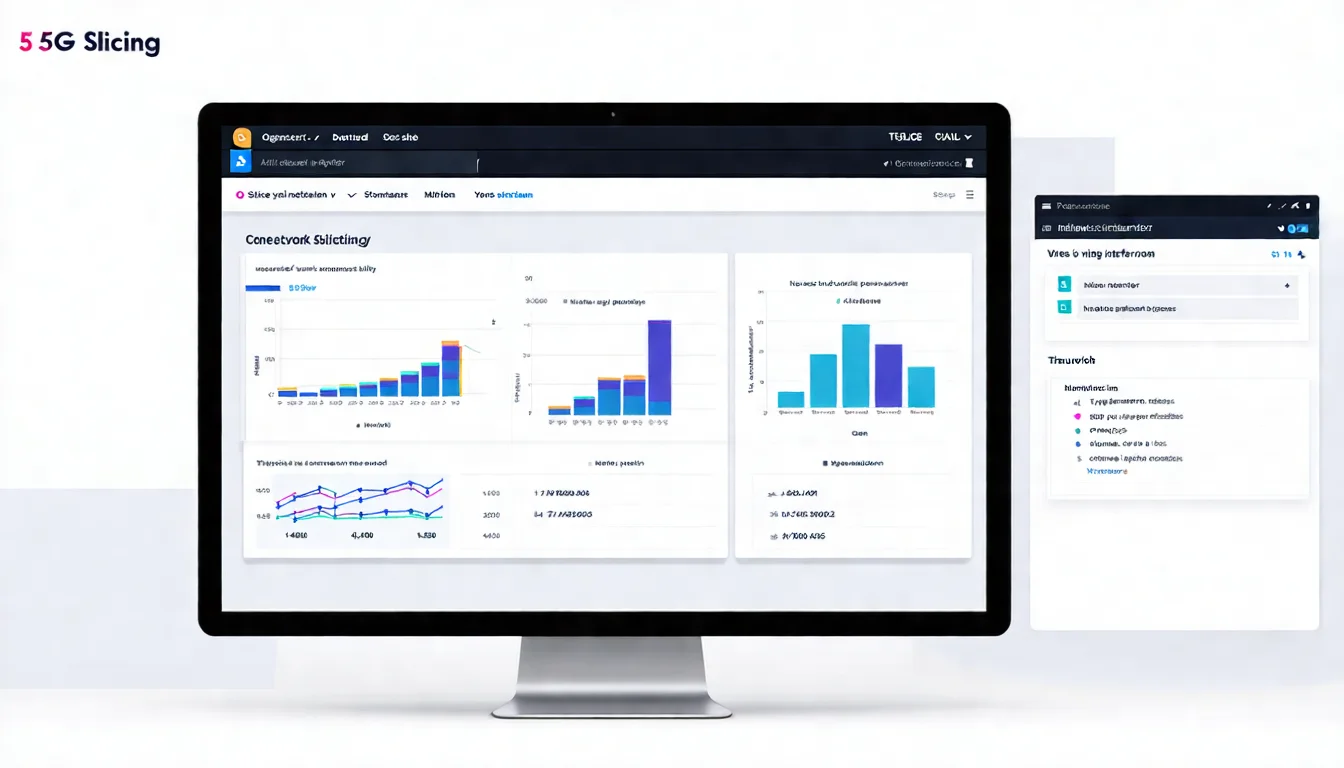
Network slicing is one of 5G's core capabilities. It allows telecom operators to virtualize multiple "logical networks" on the same physical network, each with different characteristics.
Typical Network Slices:
| Slice Type | Use Case | Characteristics |
|---|---|---|
| eMBB | High-speed broadband | High bandwidth, medium latency |
| URLLC | Ultra-low latency | Low latency, high reliability |
| mMTC | IoT | Low power, massive connections |
How Cloud Native Supports Network Slicing:
Each slice can be deployed as an independent Kubernetes Namespace with its own:
- Resource quotas (CPU, memory)
- Network policies
- QoS settings
# Network Slice Namespace Example
apiVersion: v1
kind: Namespace
metadata:
  name: slice-urllc
  labels:
    slice-type: urllc
---
apiVersion: v1
kind: ResourceQuota
metadata:
  name: urllc-quota
  namespace: slice-urllc
spec:
  hard:
    requests.cpu: "100"
    requests.memory: 200Gi
    limits.cpu: "200"
    limits.memory: 400Gi
3GPP Standards and Cloud Native
How 3GPP Defines Cloud Native 5G
3GPP is the organization that sets mobile communication standards. Starting from Release 15, the 5G architecture defined by 3GPP was designed with Cloud Native in mind:
Release 15 (2018):
- Defined SBA (Service-Based Architecture)
- NFs communicate via HTTP/2
- Introduced NRF (Service Discovery)
Release 16 (2020):
- Enhanced network slicing
- Edge computing integration (MEC)
- Improved service communication
Release 17 (2022):
- Further cloud native enhancements
- Better container support
- AI/ML integration (see Cloud Native AI Workflow Guide)
ETSI NFV and Kubernetes
ETSI (European Telecommunications Standards Institute) defines the reference architecture for NFV. As containerization trends grow, ETSI is also adjusting its architecture to support Kubernetes:
- ETSI GS NFV-IFA 029: Defines requirements for containerized VNFs
- ETSI GR NFV-IFA 047: Integration guide for Kubernetes and NFV
Key Changes:
| Traditional NFV | Containerized NFV |
|---|---|
| OpenStack (VIM) | Kubernetes |
| VM Orchestration | Container Orchestration |
| Heat Templates | Helm Charts |
| Heavyweight | Lightweight |
5G Cloud Native Technology Stack
Telecom operators' 5G Cloud Native technology stack typically includes:
Container Orchestration:
- Kubernetes (industry standard)
- OpenShift (Red Hat enterprise version)
Service Mesh:
- Istio (most commonly used)
- Linkerd
Observability:
- Prometheus + Grafana (monitoring)
- Jaeger (tracing)
- Fluentd + Elasticsearch (logging)
CI/CD:
- GitLab CI / Jenkins
- Argo CD (GitOps)
Networking:
- Calico / Cilium (CNI)
- Multus (multi-network support)
- SR-IOV (high-performance networking)
Storage:
- Rook-Ceph
- Cloud storage services
Learn more about Kubernetes technology stack? See Cloud Native Technology Stack Basics.
Telecom Operator Case Studies
Rakuten Mobile (Japan)
The world's first fully cloud native 5G network.
Rakuten Mobile launched 5G services in 2020, adopting a fully cloud native architecture from the start:
Architecture Features:
- 100% software-defined network
- All NFs containerized
- Multi-vendor integration (Cisco, Nokia, NEC, etc.)
- Self-built Rakuten Communications Platform
Results:
- Construction costs reduced by 40%
- Operating costs reduced by 30%
- New feature deployment time reduced from months to days
Dish Network (USA)
America's first cloud native 5G network.
Dish launched 5G services in 2022 with these architecture features:
- AWS as primary cloud infrastructure
- Fully Open RAN (O-RAN)
- Multi-cloud strategy
Chunghwa Telecom (Taiwan)
Taiwan's leading 5G service provider.
Chunghwa Telecom's 5G architecture adopts:
- Hybrid architecture (partially cloud native)
- Multi-vendor strategy (Ericsson, Nokia)
- Gradual containerization
Technical Challenges and Solutions
Challenge 1: Carrier-Grade Reliability
Telecom networks require 99.999% (five nines) availability, equivalent to only 5 minutes of downtime per year.
Solutions:
- Multi-AZ (Availability Zone) deployment
- Automatic failover
- Chaos engineering testing
Challenge 2: Low Latency Requirements
5G URLLC scenarios require end-to-end latency below 1 millisecond.
Solutions:
- Edge deployment (MEC)
- High-performance CNI (SR-IOV, DPDK)
- Resource reservation
Challenge 3: High-Performance Networking
Telecom workloads require extremely high packet processing performance.
Solutions:
- SR-IOV for direct NIC access
- DPDK userspace networking
- eBPF network acceleration
Challenge 4: Security Compliance
Telecom networks are subject to strict regulatory oversight.
Solutions:
- Zero trust architecture
- End-to-end encryption
- Complete audit logs
Learn more about security topics? See Cloud Native Security Complete Guide.
Challenge 5: Technical Talent
Traditional telecom engineers need to learn Cloud Native technologies.
Solutions:
- Internal training programs
- Partnerships with cloud vendors
- Recruiting DevOps talent
FAQ
Q1: Does 5G have to use Cloud Native architecture?
It's not mandatory, but 3GPP standards are designed to make Cloud Native the most natural choice. Traditional architecture can also implement 5G, but you lose the flexibility and cost advantages.
Q2: Can telecom operators use public cloud?
Yes. Dish uses AWS. But most telecom operators choose private or hybrid cloud due to data sovereignty and regulatory requirements.
Q3: What's the difference between CNF and regular container applications?
CNFs have stricter performance and reliability requirements. They need special network configuration (SR-IOV), resource isolation, and real-time guarantees.
Q4: Can existing 4G networks be upgraded to Cloud Native?
Gradual upgrades are possible. The typical path is virtualization first (VNF), then containerization (CNF). But this requires time and investment.
Q5: What technical background is needed for 5G Cloud Native?
You need a combination of telecom and IT skills: understanding 3GPP standards, Kubernetes, network virtualization, and high-performance networking. This is why talent shortage is a major challenge.
Next Steps
5G Cloud Native is a major transformation for the telecom industry. If your enterprise is evaluating or implementing related technologies:
- First understand 3GPP and ETSI standard requirements
- Evaluate the cloud native maturity of existing infrastructure
- Plan a phased migration path
- Build a cross-functional technical team
Further reading:
- Back to Core Concepts: Cloud Native Complete Guide
- Deep Dive into Kubernetes: Cloud Native Technology Stack Basics
- Understanding Security: Cloud Native Security Complete Guide
Need professional help with carrier-grade architecture design? Schedule an architecture consultation and let us help you assess your situation and plan the optimal 5G Cloud Native strategy.
References
Need Professional Cloud Advice?
Whether you're evaluating cloud platforms, optimizing existing architecture, or looking for cost-saving solutions, we can help
Book Free ConsultationRelated Articles
Cloud Native AI: Building AI/ML Workflows in Cloud Native Environments (2026)
How to build AI/ML workflows in Cloud Native environments? This article covers MLOps integration with cloud native, Kubeflow platform, GPU resource management, and AI model deployment and scaling strategies on Kubernetes.
Cloud NativeCloud Native Database Selection Guide: PostgreSQL, NoSQL, and Cloud Native Database Comparison (2026)
What is a Cloud Native Database? This article covers CloudNativePG (cloud native PostgreSQL), differences between traditional vs cloud native databases, mainstream cloud native database comparisons, and a selection decision guide.
Cloud NativeCloud Native Java Development Guide: Spring Boot 3 Cloud Native Application Practices (2026)
Cloud Native Java development guide covering Spring Boot 3 cloud native features, Spring Cloud ecosystem, GraalVM Native Image compilation, and Java cloud native application best practices.