
Gemini 4 Argon Guide: API Pricing (Intro Rate Through Nov 30), Specs, and Migrating from Gemini 3
What Gemini 4 Argon Is: The New Flagship, GA on October 13
According to Google's official changelog, Gemini 4 Argon became generally available on October 13, 2026, described as "our most capable model built for complex coding, agentic, math, and science tasks." The model page is more specific: it is built for complex software engineering, deep mathematical and scientific problem solving, autonomous multi-step agents, and long decode up to 1M tokens.
It is currently the only model in the Gemini 4 family. The Gemini 3 family remains in service, and 3.8 Flash (GA on 2026-09-02) and 3.5 Flash-Lite are the models Google recommends for new projects.
Current Gemini Text Models and Pricing
| Model | Model ID | Paid price (input/output, per million tokens) | Free tier | Official positioning |
|---|---|---|---|---|
| Gemini 4 Argon | gemini-4-argon | $2/$10 (through 2026-11-30); $4/$20 from 2026-12-01 | No | Flagship reasoning: complex software engineering, math and science, autonomous agents, long outputs |
| Gemini 3.8 Flash | gemini-3.8-flash | $0.75/$3.75 (through 2026-12-31); $1.50/$7.50 from 2027-01-01 | Yes | Most intelligent Flash: long-horizon software engineering, autonomous agents, complex enterprise workflows |
| Gemini 3.6 Flash | gemini-3.6-flash | Same as 3.8 Flash (both stages and dates) | Yes | Previous-generation Flash balancing speed and multimodal capabilities |
| Gemini 3.5 Flash-Lite | gemini-3.5-flash-lite | $0.30/$2.50 | Yes | Fastest, most cost-effective 3.5 model |
| Gemini 3.1 Pro Preview | gemini-3.1-pro-preview | Prompts ≤200K tokens $2/$12; >200K $4/$18 | No | Third-generation Pro (Preview) |
Source: official Gemini API models, pricing, and changelog pages (checked 2026-10-28), USD, Standard consumption. Gemini 3.7 Flash and 3.5 Flash were deprecated on 2026-10-08 and are not listed.
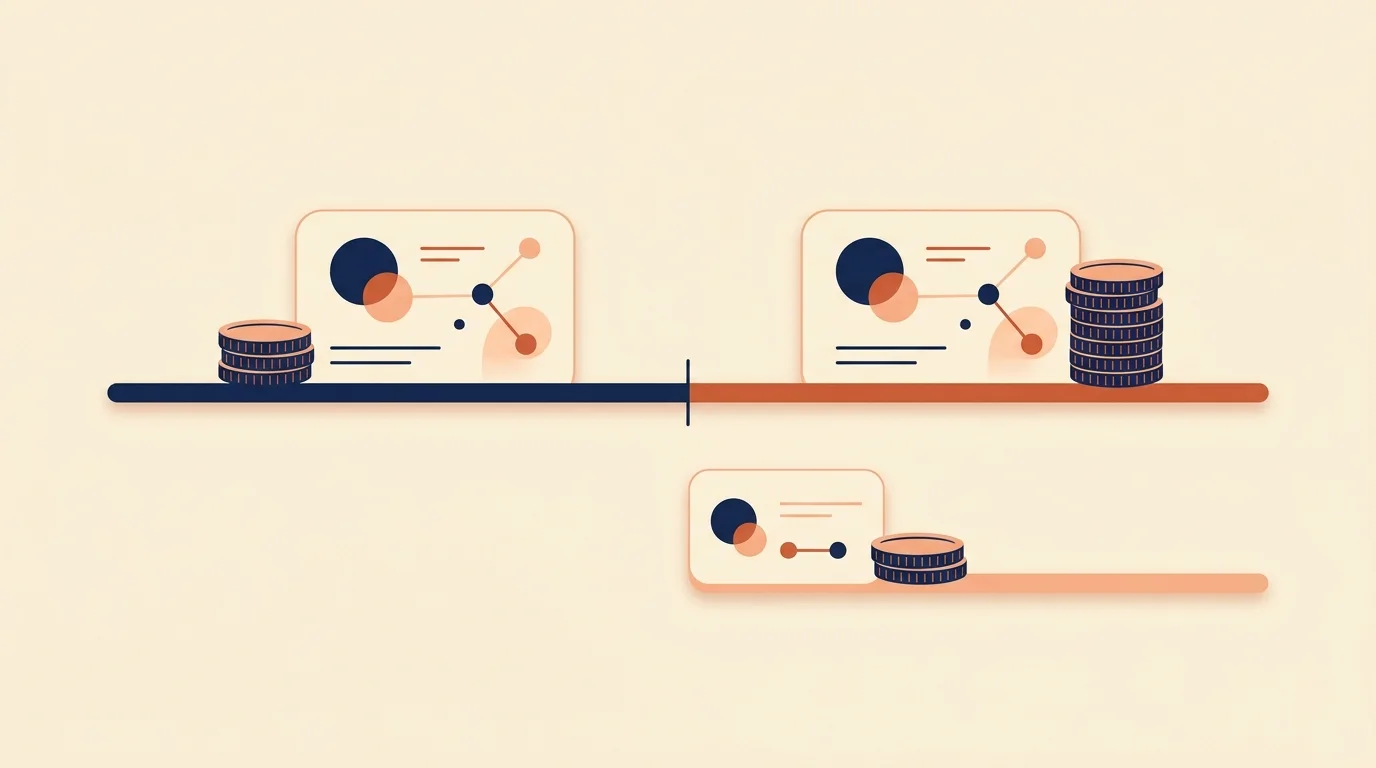
Pricing: Introductory Through 11/30, Double from 12/01
All four public consumption options for Argon have two price stages on the same dates:
| Consumption option | Through 2026-11-30 (input/output/cache) | From 2026-12-01 (input/output/cache) |
|---|---|---|
| Standard | $2.00/$10.00/$0.10 | $4.00/$20.00/$0.20 |
| Batch | $1.00/$5.00/$0.05 | $2.00/$10.00/$0.10 |
| Flex | $1.00/$5.00/$0.05 | $2.00/$10.00/$0.10 |
| Priority | $3.60/$18.00/$0.18 | $7.20/$36.00/$0.36 |
Things that are easy to miss:
- Output price includes thinking tokens: tokens the model spends on internal reasoning are billed at the output rate
- Hidden grounding tokens are billed too: Google states that internal tool system instructions and function declarations are billed when you use grounding
- Google Search grounding is billed separately: 5,000 free search requests per month (shared across all Gemini 3 and newer models), then $14 per 1,000 requests
- No free tier: every Free Tier cell reads "Not available"; content on the paid tier is not used to improve Google's products, except on the invite-only Contributor tier (a private preview), where content is used to improve products
Key Specs
- Context: 1,048,576 tokens, shared by input, thinking, and output
- Output per response: up to 65,536 in default synchronous mode; with background execution and
max_output_tokensabove 65,536, generation can run up to "1M minus your input" - Inputs/outputs: text, image, video, audio, and PDF in; text out
- Supported: function calling, structured outputs, code execution, Google Search and Google Maps grounding, URL context, file search, computer use (Preview), agentic video understanding (defaults to
static) - Not supported: image generation, audio generation, Live API
- Consumption options: Batch, Flex, and Priority are all supported
- Managed Agents: the Antigravity agent in Gemini Managed Agents can be set to use Argon
Thinking Levels: The Main Dial for Quality, Latency, and Tokens
| Level | Token use | When to use |
|---|---|---|
low | Fewest, lowest latency | Simpler tasks and cost-sensitive work; also analysis and writing that need light thinking. Quality can drop on hard tasks |
medium (default) | Balanced | Recommended for most tasks, including complex code and agentic use cases |
high | Most, slowest first token | Complex reasoning, hard math and science, the most difficult code or agent tasks; pairs well with long decode |
max_output_tokens is a hard limit on thinking plus output combined: the response stops when it is reached. For existing apps with a limit below 32K, Google recommends raising it to at least 32,768; to use fewer tokens, lower the thinking level rather than the limit.
Quickstart: The Official Interactions API Example
This is Google's minimal example (Python, using the default medium level and a 64K output limit):
from google import genai

client = genai.Client()

interaction = client.interactions.create(
    model="gemini-4-argon",
    input="Write a three.js script that renders a realistic 3D black hole with gravitational lensing."
)

print(interaction.output_text)
To set the thinking level, put it in generation_config:
from google import genai

client = genai.Client()

interaction = client.interactions.create(
    model="gemini-4-argon",
    input="Analyze this payment processing pipeline for race conditions during retry attempts and rewrite the transaction locks safely.",
    generation_config={
        "thinking_level": "medium"  # Balanced reasoning effort for complex tasks
    }
)

print(interaction.output_text)
For outputs longer than 64K, add background=True and set max_output_tokens (for example 262144). The model generates in hops of up to 64K tokens, each hop adds a model_output step to interaction.steps, and you join the text across all of them when the interaction completes. If you set background without max_output_tokens, the server stops after 64K.
Cost Math (Arithmetic, Not Benchmarks)
Assume 50 million input tokens and 10 million output tokens (including thinking) per month, no caching, Standard consumption:
| Model and period | Input cost | Output cost | Monthly total |
|---|---|---|---|
| Argon (through 2026-11-30) | $100 | $100 | $200 |
| Argon (from 2026-12-01) | $200 | $200 | $400 |
| 3.8 Flash (through 2026-12-31) | $37.50 | $37.50 | $75 |
| 3.8 Flash (from 2027-01-01) | $75 | $75 | $150 |
| (Reference) 3.1 Pro Preview, prompts ≤200K | $100 | $120 | $220 |
If 40 million of the 50 million input tokens hit the implicit cache, Argon's input cost during the introductory period is $4 (cached) + $20 (uncached) = $24, for a monthly total of $124; from 12-01 it is $8 + $40 = $48, for a monthly total of $248. Implicit caching only applies to prompts of at least 4,096 tokens, and hit rates depend on your actual requests. The same volume on Batch costs $100 a month on Argon during the introductory period and $200 from 12-01.
⚠️ Two caveats. First, December is the month with the widest gap between the two: Argon has already doubled while 3.8 Flash is still on its introductory price, so the unit price gap reaches 5.3x (about 2.7x in other periods). Second, Google notes that Argon can spend more of the output limit on thinking than earlier models, so the same task may produce more output tokens on Argon. Don't compare unit prices alone.
Migrating from the Gemini 3 Family: The Official Checklist
Google's migration checklist lists the items below; the ones near the top are the most likely to require changes to existing code:
- Update the model ID: change your target model string to
gemini-4-argon - Move off explicit caching: Argon does not support
cachedContents/caches.create, so remove calls that create or referencecached_content; implicit caching is on by default (prompts of at least 4,096 tokens), and cache hits cost 5% of the regular input price - Review
max_output_tokens: if you set it explicitly, Google recommends at least 32,768 - Configure the thinking level: test
low,medium(default), andhighbefore deciding - Remove sampling parameters:
temperature,top_p, andtop_kare ignored if provided - Use background execution for long outputs: for tasks over 64K, set
backgroundto true andmax_output_tokensabove 65,536 - Increase timeouts: hard prompts can take several minutes; use background execution or set HTTP client timeouts to at least 15 minutes
- Keep conversation state on the server: use
previous_interaction_idfor multi-turn and function calling conversations - Review cost estimates: every token the model processes is billed, including internal tool instructions when using grounding
Two related changes from the same period:
- 3.7 Flash and 3.5 Flash are deprecated (2026-10-08): they can no longer be selected in AI Studio, and API requests are automatically routed to
gemini-3.8-flash/gemini-3.6-flash; the endpoints themselves are not shutting down. Google recommends updating your model string to the newer version - Request storage is on by default: the Interactions API stores requests by default; since 2026-10-26, new paid projects using the Generate Content API also default to
store=true, which you can turn off per request withstore=falseor in the Logs and Datasets settings in AI Studio
CloudInsight Enterprise Gemini API Procurement | Local Invoices, No Foreign Credit Card Needed
With the introductory price ending in late November, what enterprises get stuck on most is often not the technology but payment, invoicing, and budgeting across billing months.
Contact CloudInsight for a Gemini API Enterprise Quote
We offer one-stop procurement for Claude, GPT, and Gemini, Taiwan uniform invoices, and technical support in Chinese.
How to Choose: Splitting Work Between Argon and 3.8 Flash
| Workload | Recommendation | Why |
|---|---|---|
| Hardest coding, math reasoning, multi-step agents | Gemini 4 Argon | Google's flagship reasoning model; use high with long decode |
| Single outputs over 64K (long documents or code) | Gemini 4 Argon | Background execution can chain hops up to roughly 1M |
| General agents, small code fixes, enterprise workflow automation | Gemini 3.8 Flash | Positioned for long-horizon software engineering and autonomous agents; under 40% of Argon's unit price (under 20% in December) |
| Development testing, proofs of concept | Gemini 3.8 Flash | Has a free tier; Argon does not |
Architectures that depend on explicit caching (cachedContents) | Stay on your current model for now | Argon supports implicit caching only, so rework comes first |
| High-volume classification, translation, simple data processing | Gemini 3.5 Flash-Lite | $0.30/$2.50, with a free tier |
A common pattern is tiering: route everyday traffic to 3.8 Flash, escalate only the problems Flash handles poorly to Argon, and default to low/medium, turning on high only for a small set of tasks.
FAQ: Gemini 4 Argon
How much does Gemini 4 Argon cost?
$2 per million input tokens and $10 per million output tokens (including thinking), with cached input at $0.10, through 2026-11-30; from 2026-12-01 it is $4/$20, with cached input at $0.20. Batch and Flex are half of Standard.
Does Gemini 4 Argon have a free tier?
No. Argon is not available on the free tier, so billing starts with the first request. For free testing, start with Gemini 3.8 Flash, which has a free tier.
What happens to pricing after November 30?
From 2026-12-01, Standard is $4 input, $20 output, and $0.20 cached input; Batch and Flex are $2/$10; Priority is $7.20/$36. The same usage roughly doubles your bill.
Gemini 4 Argon or Gemini 3.8 Flash?
Choose Argon for the deepest reasoning, long outputs, or the hardest agent tasks; start general agent and coding work on 3.8 Flash. 3.8 Flash also has introductory pricing ($0.75/$3.75 through 2026-12-31, $1.50/$7.50 from 2027-01-01) and a free tier.
Does Gemini 4 Argon support context caching?
Implicit caching only. It is on by default for prompts of at least 4,096 tokens, and cache hits cost 5% of the regular input price. Explicit caching (cachedContents / caches.create) is not supported.
Can we still use Gemini 3.7 Flash and 3.5 Flash?
Both were deprecated on 2026-10-08 and can no longer be selected in AI Studio. API requests are automatically routed to 3.8 Flash and 3.6 Flash, but Google recommends updating the model string directly.
What code changes does Argon need?
The three most common: update the model ID, remove explicit caching calls, and raise max_output_tokens to at least 32,768. Sampling parameters (temperature and others) are ignored, so you can remove them too.
Conclusion: Test During the Intro Period, Tier Your Usage from December
Three Core Recommendations
- Finish evaluations before the end of November: run a
low/medium/highcomparison while the introductory price lasts, at half of what it costs from December - Budget at the 12-01 price: $4/$20 is the long-term price; treat the introductory price as a testing window
- Tier your usage: route everyday traffic to 3.8 Flash and give only the hardest work to Argon; remove explicit caching before migrating
Ready to Adopt Gemini 4 Argon?
Contact the CloudInsight sales team and we'll help plan your Argon and 3.8 Flash usage mix and handle payment and invoicing.
Join our LINE Official Account for instant model-selection consultation.
Further Reading
- Gemini API Pricing Guide
- What Is Gemini API? Complete Guide
- Gemini API Python Tutorial
- LLM Model Ranking & Comparison
- How to Buy AI API in Taiwan
References
- What's new in Gemini 4 Argon — Gemini API Docs (checked 2026-10-28)
- Gemini 4 Argon model page — Gemini API Docs (checked 2026-10-28)
- Gemini Developer API pricing (checked 2026-10-28)
- Gemini API models
- Gemini API release notes (changelog)
- Gemini API deprecations
Need Professional Cloud Advice?
Whether you're evaluating cloud platforms, optimizing existing architecture, or looking for cost-saving solutions, we can help
Book Free ConsultationRelated Articles
Claude Haiku 5.5 Guide: Tiered API Pricing, Differences from Haiku 4.5, and Migration
Anthropic released Claude Haiku 5.5 on 2026-10-07. For prompts up to 100,000 tokens it costs just $0.10/$0.50 per million tokens, one tenth of Haiku 4.5. But a request whose prompt is over 100,000 tokens is billed at $0.50/$2.50 in full, and the new tokenizer counts the same text as roughly 30% more tokens. This guide covers official specs, both price tiers, cost math that accounts for both traps, and the changes that break or alter behavior when migrating from Haiku 4.5.
AI APIClaude Opus 5.5 and Sonnet 5.5: API Pricing, Migration Changes, and Model Choice
Anthropic released Claude Opus 5.5 (Sept 22) and Sonnet 5.5 (Sept 28) in September 2026. Opus 5.5 is priced at $4/$20 — 20% below Opus 5 — and is now Anthropic's official default for most workloads; Sonnet 5.5 stays at $2/$10. This guide covers official specs, cache pricing, cost math, and the API changes that break code migrating from Opus 5 or Sonnet 5.
AI APIGPT-6 Astra, 6.1 Sol, Luna: API Pricing, Specs, and Which to Pick
OpenAI shipped GPT-6 Astra, GPT-6 Sol and Luna, and GPT-6.1 Sol within one month in September 2026. This guide covers the official API pricing for all four models ($10/$50, $2/$10, $0.10/$0.50), the long-prompt pricing rule behind the 1M context window, real cost math, and the code settings to change when migrating from GPT-5.6 — now also covering GPT-6.1 Terra ($1/$5), added on October 26.