
What is DevOps? 2026 Complete Guide: Concepts, Tools, Processes & Career Development
Does your team often encounter this situation: Development says "it works on my machine," Operations says "then move your machine to the data center"?
This classic joke actually reflects the pain points of traditional software development. Development and Operations are like two parallel worlds, neither understanding the other, blaming each other.
DevOps emerged to break down this wall.
What is DevOps? Basic Concept Analysis
Definition and Full Name of DevOps
DevOps is the combination of Development and Operations.
But it's more than just a coined word.
DevOps is a collective term for culture, philosophy, and practices. The core goal is to enable development teams and operations teams to collaborate closely, shorten the time from development to deployment, while ensuring quality and stability.
Simply put, DevOps is about breaking down the traditional barrier of "you write your code, I manage my servers."
How Did the Term DevOps Come About?
In 2009, a Belgian engineer named Patrick Debois was very frustrated with the friction between development and operations.
He observed a phenomenon: development teams pursue rapid delivery of new features, while operations teams pursue system stability. These two goals seem conflicting, causing the entire organization to waste energy on internal friction.
So he initiated the first DevOpsDays conference, inviting like-minded engineers from around the world to discuss solutions.
Unexpectedly, this small gathering sparked a revolution in the software industry.
The term DevOps was born this way.
Core Principles of DevOps: The CALMS Framework
The best way to understand DevOps is to know the CALMS Framework:
- C - Culture: Break down departmental barriers, build shared responsibility
- A - Automation: Let machines handle repetitive work, reduce human errors
- L - Lean: Eliminate waste, focus on value-creating activities
- M - Measurement: Data-driven decisions, continuously track improvements
- S - Sharing: Openly share knowledge and experience between teams
These five elements are indispensable.
Many enterprises fail at implementing DevOps because they only bought tools without changing culture.
DevOps vs Traditional Development Model Differences
| Item | Traditional Waterfall Development | DevOps |
|---|---|---|
| Development Cycle | Months to years | Days to weeks |
| Deployment Frequency | Quarterly or yearly | Multiple times daily |
| Team Collaboration | Development and Operations separated | Development and Operations unified |
| Failure Handling | Blame, accountability | Post-mortem review, continuous improvement |
| Change Risk | Large changes, high risk | Small changes, low risk |
Traditional development is like building a large ship—spending a long time designing and building, then launching all at once.
DevOps is like a speedboat—small and agile, ready to adjust direction at any time.
Want to quickly implement DevOps? Schedule a free consultation and let experts help you plan the right solution.
Why Do Enterprises Need DevOps?
Accelerate Software Delivery Cycle
In the digital age, speed is competitiveness.
According to DORA (DevOps Research and Assessment) annual report, high-performing teams deploy 208 times more frequently than low-performing teams.
What does this mean?
When your competitors are still using traditional methods to release updates quarterly, DevOps teams may have already launched hundreds of improvements.
Netflix deploys over 100 times per day. Amazon has a code deployment every 11.7 seconds on average. This is the power of DevOps.
Improve Deployment Frequency and Stability
Traditional thinking believes: the more frequent the deployment, the less stable the system.
DevOps overturns this perception.
Through automated testing, continuous integration, progressive deployment, and other technologies, high-performing teams not only deploy faster, but system stability is actually higher.
The DORA report shows that top teams have a change failure rate of only 0-15%, while low-performing teams have rates of 46-60%.
The secret is: change only a little bit each time.
When each deployment contains only small changes, even if problems occur, it's easy to find the cause and fix quickly.
Improve Development and Operations Collaboration
The most important change in DevOps is not technology, but mindset.
In traditional organizations:
- Development team's KPI is "how many features delivered"
- Operations team's KPI is "system availability"
These two KPIs are inherently opposed. Development wants to add features, Operations doesn't want to change things for fear of problems.
DevOps solution is: give both teams a common goal.
Everyone is responsible for product quality, everyone cares about customer experience, everyone participates in the complete process from development to deployment.
Reduce Failure Risk and Recovery Time
Even the best teams make mistakes.
The difference is: how quickly can you recover after a mistake?
The DORA report points out that high-performing teams take an average of less than an hour from problem discovery to fix completion. Low-performing teams need a week to a month.
This is the difference in MTTR (Mean Time To Recovery).
DevOps ensures problems can be handled in the shortest time through comprehensive monitoring, automated alerts, and quick rollback mechanisms.
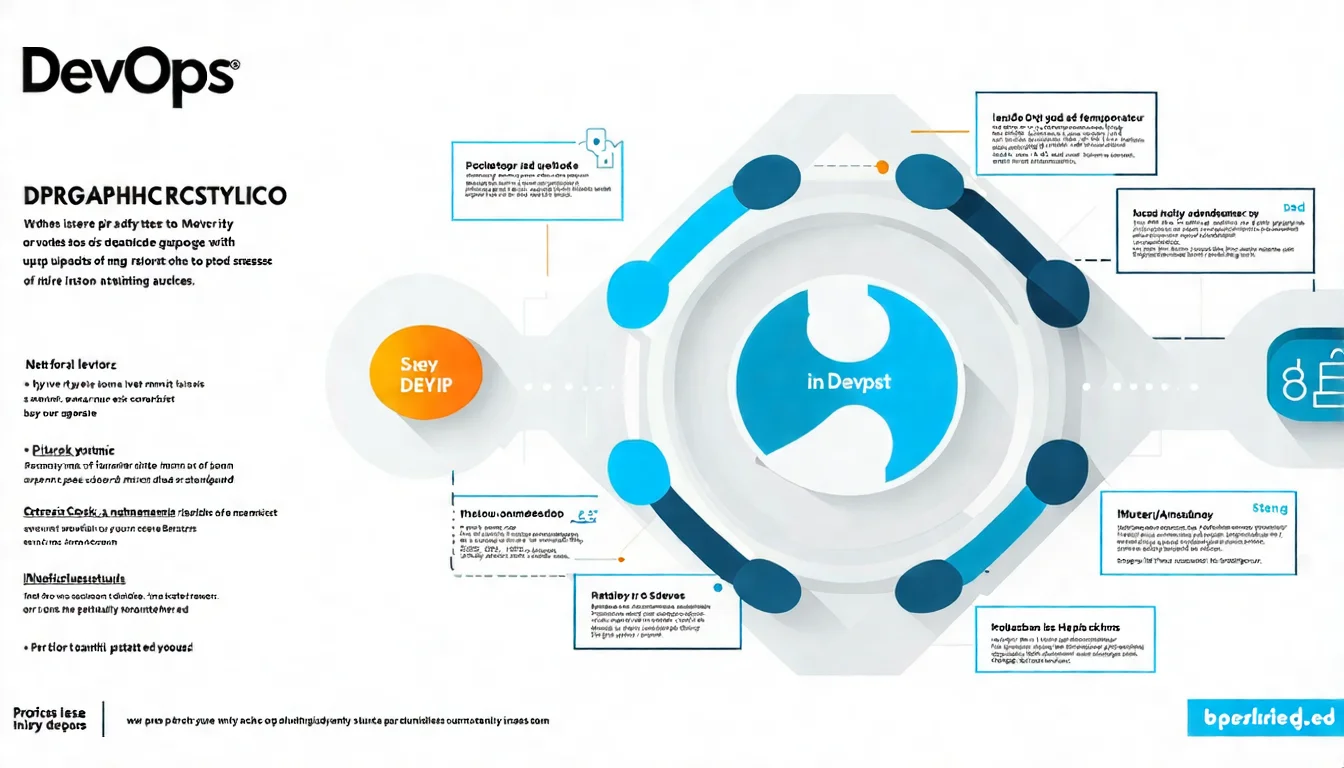
Core DevOps Processes
DevOps Lifecycle 8 Stages
DevOps is not a linear development process, but an infinite loop.
This loop typically contains 8 stages:
- Plan: Define requirements, prioritize
- Code: Developers write code
- Build: Compile code, generate executables
- Test: Automated testing ensures quality
- Release: Prepare deployable version
- Deploy: Deploy code to production environment
- Operate: Ensure system runs properly
- Monitor: Collect data, discover problems
These 8 stages form a closed loop, continuously cycling and improving.
For deeper understanding of monitoring and observability, see our DevOps Monitoring Guide.
CI/CD Continuous Integration and Continuous Deployment
CI/CD is one of the core practices of DevOps.
CI (Continuous Integration) means:
- Developers frequently merge code to main branch
- Each merge triggers automated build and test
- Ensure code is always in a releasable state
CD (Continuous Delivery/Deployment) means:
- Automatically deploy code that passes tests to various environments
- Continuous Delivery: requires manual button click to confirm
- Continuous Deployment: fully automated, no manual intervention required
To learn CI/CD implementation, see CI/CD Getting Started Tutorial.
Infrastructure as Code (IaC)
Infrastructure as Code (IaC) is another important concept.
Traditionally, setting up servers requires manual operations: logging into hosts, installing software, configuring parameters...
This approach has several problems:
- Cannot track change history
- Difficult to reproduce the same environment
- Prone to human errors
The IaC approach is: write infrastructure configuration as code.
Using tools like Terraform, Ansible, Pulumi, you can define your entire cloud architecture in code. Need a new environment? Execute one command to automatically create it.
This ensures environment consistency and reproducibility.
Monitoring and Feedback Loop
DevOps emphasizes data-driven decisions.
You need to know:
- What is the system's current state?
- Is the user experience good?
- Which features are most popular?
- Where might there be problems?
Through monitoring tools like Prometheus, Grafana, Datadog, teams can grasp system status in real-time.
When problems occur, comprehensive monitoring helps you quickly locate causes and shorten recovery time.
DevOps Tool Ecosystem
Version Control: Git, GitHub, GitLab
Git is the industry standard for version control.
Almost all software teams use Git to track code changes and manage multi-person collaboration.
Common Git platforms include:
- GitHub: World's largest open-source community, owned by Microsoft
- GitLab: Provides complete DevOps platform, can be self-hosted
- Bitbucket: Atlassian ecosystem, integrates well with Jira
Which platform to choose depends on your team's needs and existing tool chain.
CI/CD Tools: Jenkins, GitLab CI, Azure DevOps
There are many CI/CD tool choices, each with characteristics:
| Tool | Advantages | Suitable Scenarios |
|---|---|---|
| Jenkins | Open source, highly flexible, many plugins | Need high customization |
| GitLab CI/CD | High integration with GitLab | Teams already using GitLab |
| GitHub Actions | Seamless GitHub integration | Open source projects, small teams |
| Azure DevOps | Microsoft ecosystem, enterprise features | Enterprises using Azure cloud |
| CircleCI | Cloud-first, simple configuration | Need quick setup |
For deeper understanding of Azure DevOps, see Azure DevOps Complete Tutorial.
Containerization: Docker, Kubernetes
Docker solves the classic "works on my machine" problem.
Through container technology, you can package an application with its execution environment together. Whether on developer's laptop, test server, or production environment, execution results are consistent.
Kubernetes (K8s) is the industry standard for container orchestration.
When you have dozens or hundreds of containers to manage, Kubernetes handles:
- Auto-scaling
- Load balancing
- Service discovery
- Rolling updates
These two technologies are the foundation of modern cloud-native architecture.
Infrastructure: Terraform, Ansible
Terraform is the leading Infrastructure as Code tool.
Through declarative configuration files, you can define all resources on cloud platforms like AWS, GCP, Azure. Version control + code review = safe and controlled infrastructure changes.
Ansible focuses on configuration management and application deployment.
Using simple YAML syntax, you can automate server configuration and software installation.
Monitoring: Prometheus, Grafana
Prometheus is the most popular monitoring system in cloud-native environments.
It uses Pull mode to collect metrics, supports powerful PromQL query language, and natively integrates with Kubernetes.
Grafana is the artifact for data visualization.
Connect Prometheus data to Grafana, and you can build beautiful and practical monitoring dashboards to grasp system health in real-time.
For more monitoring tool introductions, see DevOps Tools Complete Guide.
Too many tools and don't know how to choose?
The DevOps tool ecosystem is complex; choosing wrong tools increases maintenance costs.
Schedule architecture consultation, let us help design the most suitable DevOps tool chain for you.
What is a DevOps Engineer?
Job Content and Responsibilities
DevOps engineers are the bridge connecting development and operations.
Daily work includes:
- Build and maintain CI/CD Pipeline: Ensure code can automatically build, test, deploy
- Manage cloud infrastructure: Use IaC tools to manage cloud resources
- Containerization and orchestration: Docker packaging, Kubernetes deployment
- Monitoring and alerting: Design monitoring strategies, handle system anomalies
- Automate everything: Turn repetitive work into scripts or programs
A senior DevOps engineer needs to understand both software development and system operations.
Required Skills List
DevOps engineers need a wide range of skills:
Basic Skills:
- Linux system administration
- Shell scripting (Bash)
- Python or Go programming
- Network fundamentals
Core Skills:
- Git version control
- CI/CD tools (Jenkins, GitLab CI, etc.)
- Docker container technology
- Kubernetes container orchestration
- Cloud platforms (AWS, GCP, Azure)
Advanced Skills:
- Infrastructure as Code (Terraform)
- Monitoring and observability (Prometheus, Grafana)
- Security fundamentals (OWASP, security scanning)
Salary Range and Market Demand
According to 2025 Taiwan market survey:
- Junior DevOps Engineer: Annual salary $20,000-27,000 USD
- Mid-level DevOps Engineer: Annual salary $27,000-40,000 USD
- Senior DevOps Engineer: Annual salary $40,000-60,000 USD
- DevOps Architect/Manager: Annual salary $50,000-83,000+ USD
Foreign companies and large tech companies typically offer better compensation. Having cloud certifications (AWS, GCP, CKA) also helps improve salary competitiveness.
In terms of market demand, DevOps engineers in Taiwan are still in short supply. As enterprise digital transformation accelerates, demand will only continue to grow.
Career Development Path
DevOps engineer careers can develop in several directions:
Technical Depth Route:
- DevOps Engineer → Senior Engineer → Technical Architect
Management Route:
- DevOps Engineer → Tech Lead → Engineering Manager
Specialist Route:
- Site Reliability Engineer (SRE)
- Platform Engineer
- Cloud Architect
For more career information, see DevOps Engineer Complete Career Guide.
DevOps Learning Roadmap
2025 DevOps Roadmap Overview
To become a DevOps engineer, the recommended learning sequence:
Stage 1: Fundamentals (1-2 months)
- Linux system administration
- Network fundamentals (TCP/IP, DNS, HTTP)
- Scripting languages (Bash, Python)
Stage 2: Version Control and CI/CD (1-2 months)
- Advanced Git operations
- CI/CD concepts and tools
- Automated testing fundamentals
Stage 3: Containerization and Orchestration (2-3 months)
- Docker container technology
- Kubernetes basics and advanced
- Helm Charts
Stage 4: Cloud Platforms (2-3 months)
- Choose one cloud to study deeply
- Cloud architecture design
- Cost optimization
Stage 5: Monitoring and Observability (1-2 months)
- Prometheus + Grafana
- Log management (ELK Stack)
- Distributed tracing
Recommended Learning Resources
Free Resources:
- roadmap.sh/devops: Most complete learning roadmap
- 90DaysOfDevOps: Popular learning challenge on GitHub
- Free training courses from cloud platforms
Paid Courses:
- Udemy DevOps courses
- Linux Foundation official training
- Pluralsight (A Cloud Guru's courses and hands-on labs moved here; standalone A Cloud Guru plans are no longer sold)
Certification and Course Recommendations
Getting certifications helps prove your professional ability:
- AWS DevOps Engineer Professional: For teams using AWS
- Azure DevOps Engineer Expert: For Microsoft ecosystem
- CKA (Certified Kubernetes Administrator): K8s most credible certification
- HashiCorp Terraform Associate: IaC entry certification
For complete learning planning, see DevOps Learning Roadmap 2026.
DevOps vs SRE vs DevSecOps
Core Differences Between the Three
These three terms are often confused, but they have different focuses:
DevOps:
- Culture and methodology
- Emphasizes development and operations collaboration
- Goal: Accelerate software delivery
SRE (Site Reliability Engineering):
- Specific practice proposed by Google
- More focused on system reliability and performance
- Uses quantified metrics like SLO, Error Budget
- "Solving operations problems with software engineering methods"
DevSecOps:
- Integrating security into DevOps processes
- Shift Left Security: Consider security from early development
- Security scanning automation
| Item | DevOps | SRE | DevSecOps |
|---|---|---|---|
| Core Goal | Accelerate delivery | Ensure reliability | Ensure security |
| Main Practices | CI/CD, automation | SLO, Error Budget | Security scanning, penetration testing |
| Team Composition | Development + Operations | Operations + Software Engineering | Development + Operations + Security |
Suitable Organization Types
- DevOps: Suitable for all organizations wanting to accelerate software delivery
- SRE: Suitable for large-scale, high-availability organizations (like finance, e-commerce)
- DevSecOps: Suitable for organizations with strict security requirements (like finance, healthcare, government)
How to Choose?
Actually, you don't need to choose—these three can coexist.
Many mature organizations practice DevOps culture, adopt SRE methods to ensure reliability, and integrate DevSecOps to ensure security simultaneously.
For deeper understanding of the differences, see DevOps vs SRE vs DevSecOps Complete Comparison.
How to Implement DevOps in Organizations?
DevOps Maturity Model
Organizational DevOps maturity is typically divided into 5 stages:
Level 1 - Initial:
- Manual processes predominate
- Development and Operations separated
- Lack of standardization
Level 2 - Managed:
- Starting to implement version control
- Basic CI processes
- Partial automation
Level 3 - Defined:
- Complete CI/CD Pipeline
- Infrastructure as Code
- Cross-team collaboration
Level 4 - Quantitatively Managed:
- Data-driven decisions
- DORA metrics tracking
- Continuous improvement culture
Level 5 - Optimizing:
- High automation
- Rapid experimentation and learning
- Innovation culture
Implementation Steps and Recommendations
Step 1: Start Small
- Choose a pilot project
- Assemble cross-functional team
- Set clear goals
Step 2: Build Infrastructure
- Implement version control
- Set up CI/CD Pipeline
- Build automated testing
Step 3: Cultivate Culture
- Encourage learning from failure
- Break down departmental barriers
- Establish sharing mechanisms
Step 4: Quantify Results
- Track DORA metrics
- Regular review and improvement
- Expand to more projects
Common Challenges and Solutions
Challenge 1: Organizational Culture Resistance
- Solution: Drive from top leadership, demonstrate success cases
Challenge 2: Skills Gap
- Solution: Invest in training, build DevOps community
Challenge 3: Tool Selection Difficulty
- Solution: Start simple, gradually expand
Challenge 4: Lack of Quantified Metrics
- Solution: Implement DORA metrics, build visualization dashboard
Taiwan DevOps Community Resources
DevOpsDays Taipei
DevOpsDays is a global DevOps community event that started in Belgium in 2009 and is now held in over 90 cities.
DevOpsDays Taipei is Taiwan's largest annual DevOps event:
- Held once a year
- Two-day agenda including keynotes and workshops
- Attracts hundreds of DevOps practitioners
For each year's actual dates and registration details, follow the official website.
Recommended Communities and Events
Online Communities:
- DevOps Taiwan Facebook Group
- iThome DevOps Column
- DevOps-related articles on Medium
Regular Events:
- DevOps Meetup
- COSCUP Open Source Conference
- Cloud Summit
Podcasts:
- DevOps Talk
- Soft & Share Developer Community
For more community resources, see DevOpsDays Taipei and Taiwan DevOps Community Overview.
FAQ
What is DevOps?
DevOps is the combination of Development and Operations, a culture and practice method emphasizing collaboration between development and operations teams. Through automated processes, continuous integration and deployment (CI/CD), DevOps can accelerate software delivery and improve quality.
How Much is a DevOps Engineer's Salary?
According to 2025 Taiwan market rates, DevOps engineer annual salary is about $20,000-60,000 USD, depending on experience and company size. Senior engineers or architects can reach $50,000-83,000+ USD.
What's the Difference Between DevOps and SRE?
DevOps is a culture and methodology emphasizing development and operations collaboration; SRE is a specific practice proposed by Google, more focused on system reliability and performance. SRE can be said to be a specific implementation of DevOps principles.
What is CI/CD?
CI (Continuous Integration) means developers frequently merge code to the main branch and automatically test; CD (Continuous Delivery/Deployment) means automatically deploying code that passes tests to production environments.
How Long Does It Take to Learn DevOps?
Those with programming or operations background can master basic skills in about 3-6 months; complete beginners may need 6-12 months. It's recommended to follow the DevOps Learning Roadmap for systematic learning.
Can I Learn DevOps Without a Programming Background?
Yes, but it will take longer to learn. It's recommended to start with Linux system administration and scripting languages, then gradually learn containerization, cloud, and other technologies.
Conclusion and Next Steps
DevOps is not just tools or processes, but a transformation in mindset.
From breaking down the barrier between development and operations, to building automated, measurable, continuously improving software delivery processes, DevOps has proven it can bring significant benefits to enterprises.
Whether you are:
- A beginner wanting to understand what DevOps is
- A manager evaluating how to implement DevOps in your team
- A developer hoping to transition to DevOps engineer
This guide hopes to give you a clear direction.
Need Professional Help?
According to the DORA report, high-performing DevOps teams deploy 208 times more frequently than low-performing teams, yet have 3x lower change failure rates.
How Can CloudInsight Help You?
- DevOps Maturity Assessment: Diagnose team status, find improvement directions
- CI/CD Process Design: Build automation processes suited to your team
- Cloud Architecture Consulting: AWS, GCP, Azure multi-cloud strategy planning
- Team Training Services: DevOps skills improvement and culture building
Schedule Free Consultation Now
If you are:
- Evaluating how to implement DevOps in your team
- Want to build or optimize CI/CD processes
- Need DevOps architecture design advice
Schedule Free Architecture Consultation - We'll respond within 24 hours
Further Reading:
- What is a DevOps Engineer? Job Content, Salary, Skills and Career Development
- DevOps Learning Roadmap 2026: Complete Roadmap from Zero
- Azure DevOps Tutorial: Complete Guide from Beginner to Practice
- What DevOps Tools Are There? 2026 Popular Tools Categorized
- What is CI/CD? Continuous Integration and Continuous Deployment Tutorial
- DevOps vs SRE vs DevSecOps: Difference Comparison and Selection Guide
- DevOps Monitoring Guide: Observability and Monitoring Tool Implementation
- DevOpsDays Taipei 2025: Taiwan DevOps Community Events Overview
References
- DORA, "Accelerate State of DevOps Report 2024"
- Patrick Debois, DevOpsDays Official Website
- Gene Kim, Jez Humble et al., "The DevOps Handbook"
- Google, "Site Reliability Engineering"
- roadmap.sh, DevOps Roadmap 2025
Need Professional Cloud Advice?
Whether you're evaluating cloud platforms, optimizing existing architecture, or looking for cost-saving solutions, we can help
Book Free ConsultationRelated Articles
What DevOps Tools Are There? 2026 Popular Tools Categorized with Selection Recommendations
2026 complete DevOps tools guide! From version control, CI/CD, containerization to monitoring, systematically introducing pros, cons, and applicable scenarios of various tool categories. Help you build the DevOps toolchain that best fits your team.
DevOpsWhat is CI/CD? Continuous Integration and Continuous Deployment Beginner Tutorial [2026]
What is CI/CD? Complete analysis of Continuous Integration (CI) and Continuous Deployment (CD) concepts and implementation methods. Covers Pipeline design, tool comparisons, best practices, and practical examples to help your team build efficient automated delivery workflows.
AzureAzure DevOps Tutorial: Complete Guide to Building CI/CD Pipelines from Scratch
How to use Azure DevOps? This tutorial starts from zero, fully explaining Azure DevOps's five major services: Azure Repos, Boards, Pipelines, Test Plans, and Artifacts. Includes CI/CD Pipeline setup steps and YAML examples to help you build automated development workflows.