
AI Server Cooling Stocks | Water Cooling, Liquid Cooling Technology Analysis & Investment Opportunities
Disclaimer: This article is an industry and technology explainer, not investment advice. Any stocks mentioned are for industry illustration only; stock information changes, so verify the latest filings and share prices before investing, and make your own decisions and bear your own risk.
Introduction: Why is the AI Server Cooling Problem So Severe?
One AI server's power consumption equals 10 traditional servers.
This isn't an exaggeration. NVIDIA's GB200 server rack consumes 120kW per rack, equivalent to 40 households' electricity usage. If this heat can't be dissipated, chips will overheat and burn out within seconds.
Traditional fan cooling is no longer sufficient. This is why "liquid cooling" has become a key technology in the AI era, and related stocks have become investor favorites.
This article will help you understand: why AI servers need special cooling, the differences between cooling technologies, and which Taiwan manufacturers deserve attention.
Want to understand AI server basics first? Read our What is an AI Server? Complete Analysis and Stock Investment Guide
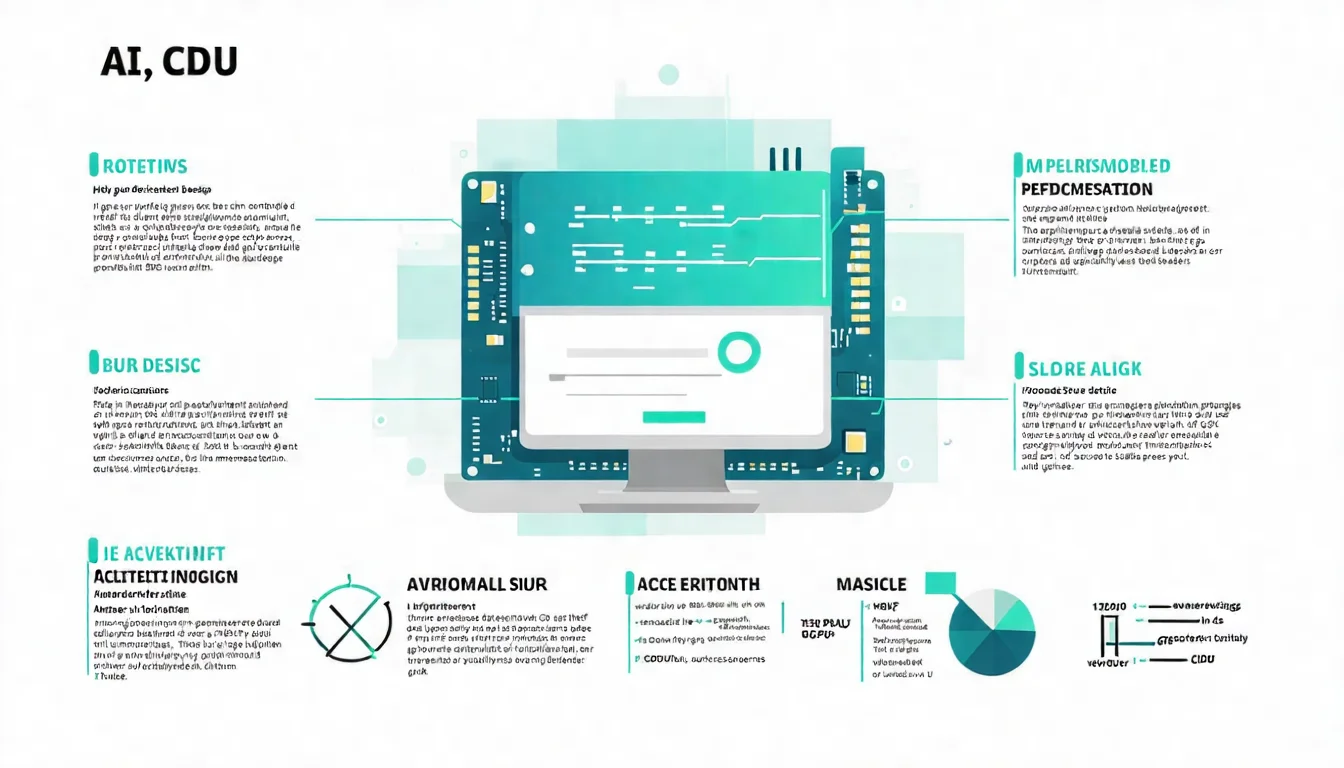
Part One: Why Do AI Servers Need Special Cooling?
1.1 GPU High Power Consumption Cooling Challenges
The core of AI servers is the GPU, and GPU power consumption is skyrocketing.
Look at this trend:
| GPU Model | Release Year | TDP (Thermal Design Power) | Growth vs Previous Gen |
|---|---|---|---|
| V100 | 2017 | 300W | - |
| A100 | 2020 | 400W | +33% |
| H100 | 2022 | 700W | +75% |
| B200 | 2024 | 1,000W | +43% |
In just 7 years, single GPU power consumption grew from 300W to 1,000W, increasing over 3x.
A server with 8 B200 GPUs generates 8,000W of heat from GPUs alone. Add CPU, memory, and power conversion losses, and total power easily exceeds 10kW.
Traditional fans simply can't blow away this much heat.
1.2 Traditional Air Cooling Limitations
Traditional servers use "air cooling": fans blow cold air across heat sinks to carry away heat.
This approach has several fundamental limitations:
Heat dissipation efficiency has a ceiling
Air has low heat capacity, limiting its ability to carry away heat. When power exceeds 300-400W, more fans can't effectively dissipate heat.
Noise problems
High power requires high-speed fans, with noise reaching 80 decibels or more—as loud as a drill.
Poor space efficiency
Air cooling requires sufficient airflow channels, limiting server density. A single rack can handle at most 20-30kW of equipment.
Energy waste
Data center air conditioning consumes enormous power. Traditional air-cooled data centers have PUE (Power Usage Effectiveness) of about 1.5-2.0, meaning for every 1 unit of power for computing, 0.5-1 units are needed for cooling.
1.3 How Cooling Efficiency Affects AI Computing
Cooling isn't just about "not burning up"—it directly affects computing performance.
Temperature affects performance
GPUs have "thermal throttling" mechanisms: they automatically reduce frequency when temperatures are too high. A poorly cooled AI server may only achieve 70-80% of rated performance.
Affects equipment lifespan
Long-term high-temperature operation accelerates chip aging. Good cooling can extend equipment life by 2-3 years.
Affects deployment density
Cooling efficiency determines how much computing power fits in a single rack. Liquid cooling can increase rack density by 3-5x.
For more server hardware knowledge, see Server Complete Guide: From Basics to Enterprise Applications
Part Two: Cooling Technology Comparison
There are currently four mainstream server cooling technologies: air cooling, water cooling, liquid cooling, and immersion cooling.
2.1 Air Cooling
Principle: Fans drive air across heat sinks to carry away heat.
Advantages:
- Lowest cost
- Simple maintenance
- Mature technology
Disadvantages:
- Limited heat dissipation capacity (single rack < 20kW)
- High noise
- Poor energy efficiency
Suitable scenarios: Traditional servers, low-power applications
2.2 Water Cooling
Principle: Water (or coolant) flows through water blocks on CPU/GPU, carrying heat to radiators.
This is similar to gaming PC water cooling, but at larger scale.
Advantages:
- Heat dissipation efficiency 5-10x higher than air cooling
- Low noise
- Can handle 500-700W single chip power
Disadvantages:
- Requires additional piping and pumps
- Leakage risk
- More complex maintenance
Suitable scenarios: High-performance computing, medium AI servers
2.3 Liquid Cooling
Principle: Uses special dielectric coolant (not water), directly contacting chips or carrying heat through cold plates.
Liquid cooling comes in two types:
- Indirect liquid cooling (Cold Plate): Coolant doesn't directly contact chips, heat transfers through cold plates
- Direct liquid cooling (Direct-to-Chip): Coolant flows over chip surfaces
Advantages:
- Extremely high heat dissipation efficiency
- Can handle 1,000W+ single chip power
- Good energy efficiency (PUE can reach 1.1-1.2)
Disadvantages:
- Higher cost
- Requires dedicated CDU (Coolant Distribution Unit)
- High technology barrier
Suitable scenarios: AI servers, H100/B200 and other high-power GPUs
2.4 Immersion Cooling
Principle: The entire server is submerged in dielectric coolant, with all components directly cooled by the liquid.
This is the most extreme cooling method—the whole machine is immersed in "oil."
Advantages:
- Strongest heat dissipation capability
- Completely silent
- PUE can reach 1.03-1.05
- Extended equipment life (no dust, humidity)
Disadvantages:
- Highest cost
- Maintenance requires special equipment
- Requires dedicated rack design
Suitable scenarios: Ultra-high-density data centers, extreme computing requirements
Cooling Technology Comparison
| Cooling Method | Heat Dissipation | Cost | Maintenance | Noise | PUE | Power Rating |
|---|---|---|---|---|---|---|
| Air Cooling | ★★☆☆☆ | Low | Simple | High | 1.5-2.0 | < 400W |
| Water Cooling | ★★★★☆ | Medium | Medium | Low | 1.3-1.5 | 400-700W |
| Liquid Cooling | ★★★★★ | High | Complex | Very Low | 1.1-1.2 | 700-1200W |
| Immersion | ★★★★★ | Highest | Complex | None | 1.03-1.05 | > 1000W |
Planning an AI Server Room? Cooling is Key
According to Uptime Institute surveys, cooling system failures are the second leading cause of data center outages, behind only power issues.
How Can CloudInsight Help You?
- Cooling needs assessment: Calculate required cooling capacity based on computing load
- Technology selection advice: Evaluate suitability of air, liquid, and immersion cooling
- Server room renovation planning: Assess if existing facilities can support liquid cooling
- Vendor comparison: Help evaluate cost-effectiveness of different cooling solutions
Common Questions:
- Can existing server rooms be upgraded to liquid cooling?
- What are liquid cooling system construction costs?
- How to ensure cooling system reliability?
👉 Schedule a free architecture consultation and let experts help you evaluate
Part Three: AI Server Cooling Stocks
Surging cooling technology demand directly drives related manufacturers' revenue growth.
3.1 Thermal Module Manufacturers
Thermal modules are the most directly benefiting sector, including heat pipes, vapor chambers, and heat sinks.
Auras Technology (3324)
| Item | Description |
|---|---|
| Main Products | Heat pipes, vapor chambers, thermal modules |
| AI Server Positioning | Primary supplier of NVIDIA H100 thermal modules |
| Recent Developments | AI cooling revenue grew significantly |
| Investment Highlights | Technology leadership, covers tier-one customers |
Auras is Taiwan's leading thermal module company and a primary supplier of NVIDIA GPU thermal modules. As H100 and B200 shipments increase, Auras's AI-related revenue continues growing.
AVC (Asia Vital Components) (3017)
| Item | Description |
|---|---|
| Main Products | Thermal modules, vapor chambers, heat pipes |
| AI Server Positioning | GPU cooling solutions, server cooling |
| Recent Developments | AI products a rising share of revenue |
| Investment Highlights | Capacity expansion, margin improvement |
AVC is another major thermal module manufacturer, actively expanding AI server cooling business in recent years, with margins outperforming peers.
Sunon (2421)
| Item | Description |
|---|---|
| Main Products | Cooling fans, liquid cooling systems |
| AI Server Positioning | High-efficiency fans, liquid cooling pumps |
| Recent Developments | Liquid cooling product line expansion |
| Investment Highlights | Expanding into liquid cooling sector |
Sunon's traditional strength is cooling fans, but recently started entering liquid cooling with pumps and related products.
3.2 Water/Liquid Cooling Equipment Manufacturers
As liquid cooling becomes mainstream, CDU (Coolant Distribution Unit) and liquid cooling system manufacturers are gaining attention.
Chenbro Micom (8210)
| Item | Description |
|---|---|
| Main Products | Server chassis, liquid cooling racks, CDU |
| AI Server Positioning | Complete liquid cooling solutions |
| Recent Developments | Liquid cooling rack shipments surging |
| Investment Highlights | Expanding from chassis to liquid cooling systems |
Chenbro was originally a server chassis manufacturer, now actively developing liquid cooling racks and CDU products, upgrading from "selling chassis" to "selling liquid cooling solutions."
Kaori Heat Treatment (8996)
| Item | Description |
|---|---|
| Main Products | Heat exchangers, CDU |
| AI Server Positioning | Data center cooling equipment |
| Recent Developments | CDU orders growing |
| Investment Highlights | Heat exchange technology extension |
Kaori's traditional strength is heat exchangers, with technology extending to data center CDU applications.
3.3 Chassis and Rack Manufacturers
Liquid-cooled servers require specially designed chassis and racks, benefiting related manufacturers.
King Slide (2059)
| Item | Description |
|---|---|
| Main Products | Server rails, rack accessories |
| AI Server Positioning | Heavy-duty rails (AI servers are heavier) |
| Recent Developments | Increased demand for high-load rails |
| Investment Highlights | Niche market leader |
King Slide is the hidden champion of server rails. AI servers with multiple GPUs are much heavier than traditional servers, requiring special heavy-duty rails.
Yingbon (3558)
| Item | Description |
|---|---|
| Main Products | Server chassis, thermal modules |
| AI Server Positioning | GPU server chassis |
| Recent Developments | AI chassis orders growing |
| Investment Highlights | Integrated chassis and cooling |
Cooling Stock Overview
| Company | Code | Main Products | AI Positioning | Recent Developments |
|---|---|---|---|---|
| Auras | 3324 | Thermal modules | ★★★★★ | H100 primary supplier |
| AVC | 3017 | Thermal modules | ★★★★☆ | AI a rising share |
| Sunon | 2421 | Fans, liquid cooling | ★★★☆☆ | Entering liquid cooling |
| Chenbro | 8210 | Chassis, CDU | ★★★★☆ | Liquid cooling solutions |
| Kaori | 8996 | Heat exchangers | ★★★☆☆ | CDU extension |
| King Slide | 2059 | Rails | ★★★☆☆ | Heavy-duty rails |
| Yingbon | 3558 | Chassis | ★★★☆☆ | AI chassis |
Part Four: Investment Strategy and Risk Assessment
Before investing in cooling stocks, understand industry dynamics and potential risks.
4.1 Industry Growth Drivers
Short-term drivers
- NVIDIA high-end GPUs continue shipping, strong thermal module demand
- New-generation high-power GPU racks enter mass production, liquid cooling demand explosion
- Major cloud providers expanding AI data centers
Medium-term drivers
- Liquid cooling shifts from optional to standard, increasing penetration
- Edge AI servers drive new cooling demand
- Energy efficiency regulations promote liquid cooling adoption
Market size
The global AI server cooling market is growing rapidly, and as liquid cooling penetration rises, the market is expected to keep expanding fast. For exact market size and growth figures, refer to the latest reports from Dell'Oro, IDC, and similar research firms.
4.2 Stock Selection Logic
When investing in cooling stocks, evaluate from three dimensions:
Technology barriers
Prioritize companies with patents and proprietary technology. Thermal modules may look "simple," but high-performance product manufacturing know-how isn't easily replicated.
Customer structure
Companies directly supplying NVIDIA or tier-one ODMs (Foxconn, Quanta) have better order visibility.
Gross margin
Thermal product margins vary widely. Pure OEM may be only 10-15%, while technology-rich products can reach 25-30%.
4.3 Risk Factors
Industry risks
- NVIDIA dependency: Taiwan manufacturers heavily depend on NVIDIA platform; if AMD, Intel, or other competitors rise, the landscape could change
- Technology iteration: Cooling technology continuously evolves; falling behind means getting eliminated
- Capacity oversupply: If AI demand falls short of expectations, cooling manufacturers may face inventory pressure
Individual stock risks
- Customer concentration: Some manufacturers have revenue highly concentrated in few customers
- Raw material volatility: Copper price fluctuations affect costs and margins
- Valuation risk: After large run-ups, some stocks may be richly valued; watch valuation risks
Investment recommendations
- Diversify: Don't bet heavily on single stocks; consider 2-3 stock combinations
- Monitor margin changes: Declining margins may signal intensifying competition
- Watch capacity utilization: Declining utilization indicates weakening demand
- Long-term holding mindset: AI cooling is a long-term trend; short-term volatility is inevitable
Part Five: Cooling Technology Trends
Cooling technology is rapidly evolving. Here are several key trends.
5.1 Rapid Liquid Cooling Penetration Increase
Liquid cooling penetration in AI servers is rising rapidly and may become the mainstream configuration within a few years.
Driving factors:
- GPU power continues rising (B200 reaches 1,000W)
- Liquid cooling costs gradually declining
- Higher energy efficiency requirements
5.2 Immersion Cooling Begins Commercial Deployment
Immersion cooling was previously seen as "experimental technology," but large-scale commercial cases have begun to appear in recent years.
Microsoft, Google, and other major companies are testing or deploying immersion cooling data centers. This technology has a chance to gradually gain adoption over the coming years.
5.3 Cooling and Rack Integration
The future trend is "cooling integrated into racks."
Instead of individual server cooling, the entire rack becomes a cooling unit, with unified management of coolant flow and temperature control.
For manufacturers, this means pure thermal modules aren't enough—complete solutions are needed.
Part Six: FAQ
Q1: What is a liquid-cooled server?
A liquid-cooled server uses coolant (rather than air) to carry away heat from chips. Coolant flows through cold plates or water blocks on CPU/GPU, carrying heat to external cooling equipment.
Compared to air cooling, liquid cooling has 5-10x higher heat dissipation efficiency, suitable for high-power AI servers.
Q2: What's the difference between water cooling and liquid cooling?
Strictly speaking:
- Water cooling: Uses water or water-based coolant
- Liquid cooling: Uses special dielectric coolant (non-conductive)
In the AI server field, the terms are often used interchangeably. The key difference is dielectric fluid can directly contact electronic components, while water requires indirect heat transfer.
Q3: What is immersion cooling?
Immersion cooling submerges the entire server in dielectric coolant. All components are directly cooled by the liquid, providing maximum cooling efficiency but also maximum cost.
Q4: What are the cooling stocks?
Major Taiwan cooling stocks include:
- Thermal modules: Auras (3324), AVC (3017)
- Fans/liquid cooling: Sunon (2421)
- Chassis/CDU: Chenbro (8210), Yingbon (3558)
- Rails: King Slide (2059)
Q5: Will liquid cooling become mainstream?
Yes. As GPU power continues rising, liquid cooling has shifted from "optional" to "standard," and its penetration is expected to keep rising rapidly.
Part Seven: Next Steps
AI server cooling challenges are the core driver of liquid cooling technology development.
Whether you're:
- An investor: Looking to position in cooling stocks
- An IT manager: Planning AI data centers
- A procurement person: Evaluating cooling equipment suppliers
Understanding cooling technology trends is essential homework.
Still Have Questions? Let Experts Help
The CloudInsight team has extensive experience in cloud infrastructure and data center planning.
We can help you:
- Assess if existing server rooms can support AI servers
- Compare cost-effectiveness of different cooling solutions
- Plan server room renovation or new construction
- Assist in evaluating suppliers
Consultation is Completely Free
Whatever you decide, we're happy to provide professional opinions. No sales pitch, no pressure.
👉 Schedule a free consultation and let experts help evaluate your server room cooling solutions
We'll respond within 24 hours.
Further Reading
- Server Complete Guide: From Basics to Enterprise Applications
- What is an AI Server? Complete Analysis and Stock Investment Guide
- Server Rack Complete Guide: Specifications, Selection, and Planning
- Taiwan Server Manufacturer Rankings: Brand Comparison and Selection Guide
References
- Uptime Institute, "Data Center Cooling Survey 2024"
- Dell'Oro Group, "Data Center Physical Infrastructure Forecast"
- Taiwan Stock Exchange, Company annual reports and earnings call materials
- NVIDIA, "Data Center Cooling Solutions Guide"
- IDC, "Worldwide Data Center Cooling Market Forecast 2024-2028"
Need Professional Cloud Advice?
Whether you're evaluating cloud platforms, optimizing existing architecture, or looking for cost-saving solutions, we can help
Book Free ConsultationRelated Articles
What is an AI Server? 2026 Complete Guide | Architecture, Vendors, Investment Guide
In-depth analysis of AI server definitions, hardware architecture, and operating principles. From NVIDIA Blackwell (B200/GB200/GB300) to the previous-gen Hopper (H100/H200), with Taiwan AI server vendors and investment opportunities for 2026.
ServersDNS Server Not Responding? 5-Step Complete Troubleshooting Guide [2026 Updated]
What to do when DNS server is not responding? Complete 5-step tutorial to fix Windows/Mac DNS issues. Includes changing to Google DNS, clearing cache, ISP DNS settings tutorial—fix it in 3 minutes.
ServerWhat is a Server? 2026 Complete Guide | Types, Selection, Setup Explained
Complete analysis of server definition, type comparison, purchasing guide, and setup tutorial. From cloud servers to AI servers, find the solution that best fits your needs. Includes price ranges, brand recommendations, and FAQ.